
The Balusters
Published April 27, 2026
“We all need to be more careful with our words,” says one of the well-meaning but misspoken characters in The Balusters. David Lindsay-Abaire’s new play at the Manhattan Theatre Club’s Samuel J. Friedman Theatre chronicles the well-heeled chaos within an affluent homeowner’s association where a color of paint or type of construction can inspire secret alliances and shocking betrayals equivalent to the federal government rather then neighborhood.
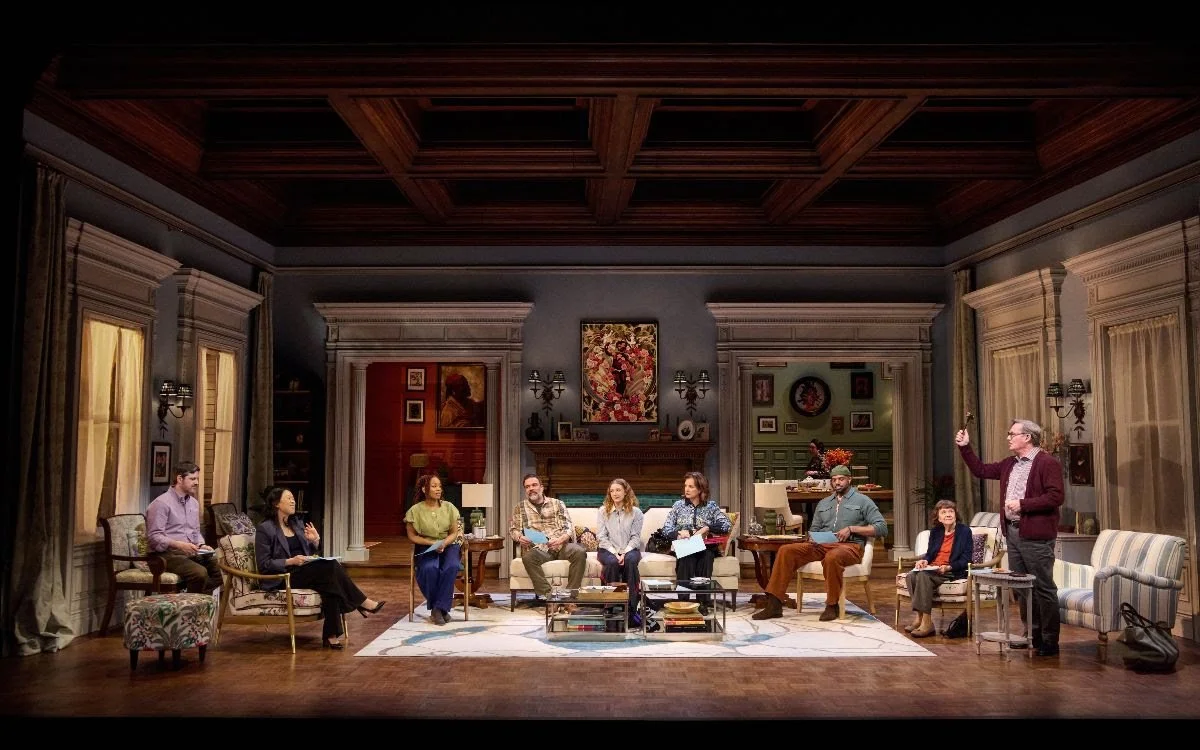
How much chaos could a nine-member group cause? Enough to pack 105 minutes with laughter, both joyful and uncomfortable, when directed by Kenny Leon and performedby this excellent ensemble. The meetings are hosted by Kyra (Anika Noni Rose, in a brilliantly paced performance), with the assistance of her housekeeper Luz (Maria-Christina Oliveras). Luz used to work for Vernon Point Board President Elliot (Richard Thomas) and left under vague, but ominous, circumstances.
Kyra, a newcomer to the neighborhood, secured a spot on the Board thanks to her friend Melissa (Jeena Yi), who is constantly frustrated by the daffy elder Penny (Marylouise Burke), who confuses her with another woman of the same name, but refuses to correct her. Conflict also simmers between Ruth (a delicious Margaret Colin), whostokes conflictby flaunting her fur coats in the face of Willow, a perpetually offended vegan (Kayli Carter). Ricardo Chavira plays Isaac, a construction worker devoted tothe neighborhoodFacebook group, while Michael Esper carefully bottles Alan’s frustration and Kira finds an ally in Brooks (Carl Clemons-Hopkins), a gay travel writer.
New to Vernon Point, Kyra doesn’t want to make waves. She simply wants a stop sign installed outside her house to stop the flow of car accidents that have taken place at a blind intersection. But Elliot balks at the proposition, waxing poetic about the scenicbeauty of the street and claiming a stop sign would “dimmish the character of the block” character requires the titular porch architecture materials to be period-appropriate or construction must halt. Kyra, the mother of two young girls, fires back with, "You think a stop sign is uglier than a dead child. I don't.”
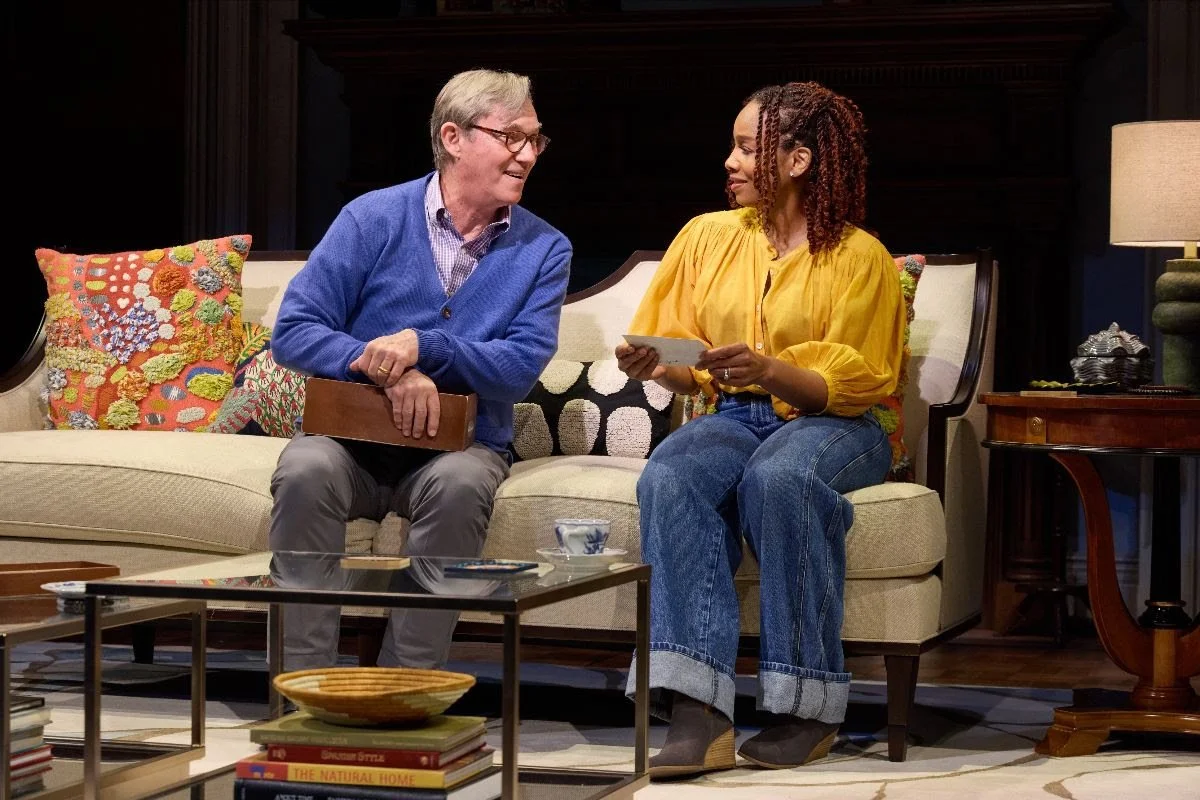
Rose’s delivery of that line hints at the past Kyra is trying to shed – a past that includes a contentious co-op board and an ascent up the socioeconomic ladder to the tasteful opulence of her current home. Her attraction to Vernon Point – its beauty, charm and safety – stems from the very characteristics she is now working to change. Rose skillfully depicts this internal conflict, especially during her interactions with Luz.
The conflict escalates, politely and passive-aggressively, in Derek McLane’s parlor setup, which does more to establish Kira’s character than 10 straight minutes of dialogue could. The same can be said for Emilio Sosa’s costumes. Elliot dons a wardrobe of neutrals and pastels while he waxes poetic about preserving the neighborhood’s past – a past that, when appealing to Kyra by showing her old photographs, he neglects to notice consists only of white people. His soft-spoken charm almost masks the patronizing tone that demonstrates how accustomed he is to getting his way, while Kira’s determination to avoid making waves evolves into a public confrontation that proves Chekhov’s gun theory to be right (even if it’s about architecture, not firearms).
Portraits of ineffective bureaucracy are always timeless, and previous seasons’ The Minutes and Eureka Day could have met audiences’ need for schadenfreude watching holier-than-thou liberals tie themselves in knots as they struggle to avoid offending their peers. Conversations about security spark accusations of racism while failure to remember correct pronouns inspire eye rolls, and one person’s request to be informed of the correct language is met with, “It’s not our job to teach you.”
While the weaponizing of microaggressions could become tiresome, as could Alan’s second-act rant about the difficulty of being a liberal white man, the Ballusters’ ensemble works so harmoniously and efficiently that the play moves forward without retreading too-familiar territory. Burke’s Penny inspires laughter with almost every line while simultaneously conveying innocence and insight, while Colin’s Ruth delights in her refusal to ensure the comfort of others. Clemons-Hopkins’ timing elevates every scene he’s in, and Oliveras’ ability to communicate lines without saying a word is an asset to the play and a detriment to Kyra.
There are moments in which the laughter comes from discomfort, or perhaps recognition or empathy with the characters, but that’s to be expected at a subscription non-profit theater. One wonders how The Balusters would fare in other settings. They just might topple.