
An American Daughter
Published August 30, 2026
When I saw Wendy Wasserstein’s seminal play The Heidi Chronicles 11 years ago, I left the theater feeling something I hadn’t felt in a long time – seen. A newly single 31-year-old working on an all-male team, I couldn’t stop thinking of Heidi (beautifully performed by Elisabeth Moss) a successful art historian, attending a friend’s baby shower and standing at an awkward distance from her friends, unsure of what to say. Her discomfort was relatable.
Wasserstein, whose writing explored the eternal question of whether women can “have it all” , explores similar themes in her play An American Daughter. But while The Heidi Chronicles floated those questions within a moving personal story, An American Daughter drops them to the floor with a heavy thud.
Produced by La Femme Theatre, dedicated to exploring the female experience through plays, An American Daughter arrives Off-Broadway at the Pershing Square Signature Center. This production offers a brand-new draft of Wasserstein’s play, culled from the playwright’s revisions and the script of a TV adaptation. An American Daughter first ran on Broadway in 1997. While timely then, it is undeniably dated now.
Directed by Sarna Lapine, An American Daughter offers a slice of now-dated Americana drawn heavily from the Clinton administration. While clearly intended to inspire nostalgia from the audience, it instead evokes distracting thoughts about our current administration. And while this critic deeply appreciates political theater, the parallels make it impossible to lose oneself in the production.
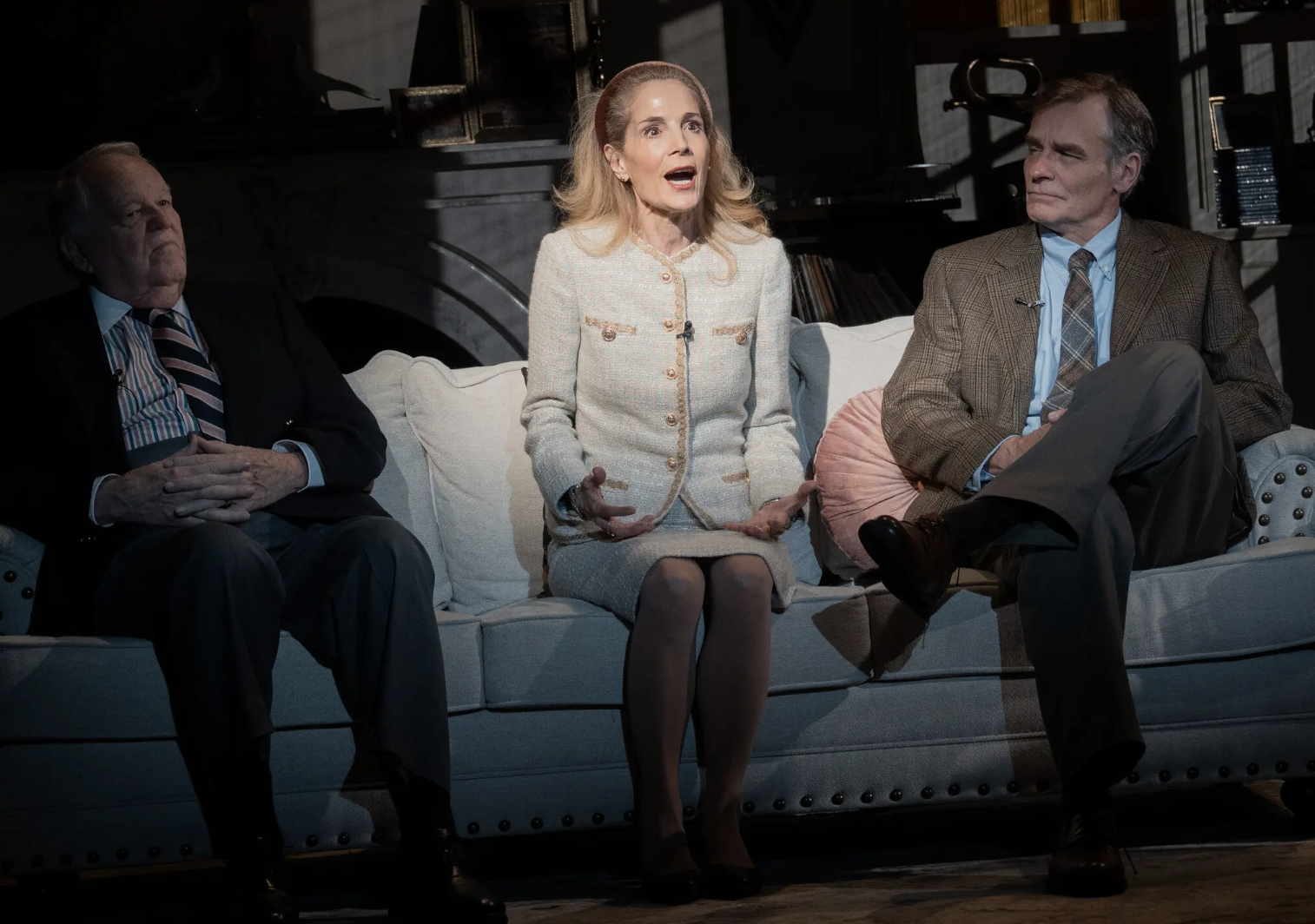
Wasserstein’s play follows Lyssa Hughes (played by Jean Lichty, La Femme’s founder), a successful doctor whose nomination for Surgeon General is considered a safe, bipartisan selection. The daughter of the established Senator Alan (Dakin Matthews), Lyssa also happens to be a fifth-generation descendant of Ulysses S. Grant. A liberal devoted to progress in women’s health, she is married to Walter (Robert Sean Leonard), a professor suffering an inconveniently timed mid-life crisis – one that perhaps motivates him to sabotage his wife’s nomination when he reveals to a reporter that his impeccable wife once forgot to report to jury duty.
When Lyssa and Walter’s friend, conservative writer Morrow McCarthy (Ryan Spahn) learns of her secret, as does the TV personality Timber Tucker (Chris Ghaffari), a media firestorm erupts. It is further fanned by Lyssa’s description of her late mother as “the kind of ordinary Indiana housewife who took pride in her icebox cakes and cheese pimento canapes” and lacked “a sense of adventure.”
In a scene eerily foreshadowing of the present day - albeit with print newspapers instead of screens – Walter (perhaps a little too eagerly) informs Lisaof the fury of Middle-American voters who perceived her comments as uppity, liberal, condescending and alienating. (If soy milk was the norm at the time, I’m fairly confident the script would include a remark about lattes.)
It’s impossible to watch An American Daughter without thinking of Zoe Baird, the attorney general nominee whose nomination was thwarted by the news that she hired an undocumented immigrant as her nanny and did not pay her Social Security taxes. But the real ghost haunting this production is Hillary Clinton and her infamous 1992 remark, “I suppose I could have stayed home and baked cookies and had teas, but what I decided to do was to fulfill my profession which I entered before my husband was in public life.” The similarities to Clinton don’t end there – a headband plays a pivotal role in the play’s second act.
Equally futile is watching this play without thinking of Clinton’s 2016 loss to Donald Trump and what might have been. The current state of the Washington, thanks to this administration, is so far removed from the Washington in this play, that it’s difficult to relate to Lyssa and her circle. Further weighing the production is Lichty’s performance as Lyssa. She plods through the play delivering her lines in a flat, pedantic tone, at times hardly reacting to the absurdity of her situation or giving justice to Wasserstein’s clever dialogue.
What could have been powerfully movingscenes between Lyssa and Walter as they navigate the complicated dynamics of their marriage, both in and outside their home, feel empty. Leonard conveys Walter’s confusion with his place in the world, but his introspection seems immature rather than sympathetic. And when Lyssa finally speaks her mind, Lichty’s outburst sounds rehearsed rather than impassioned.
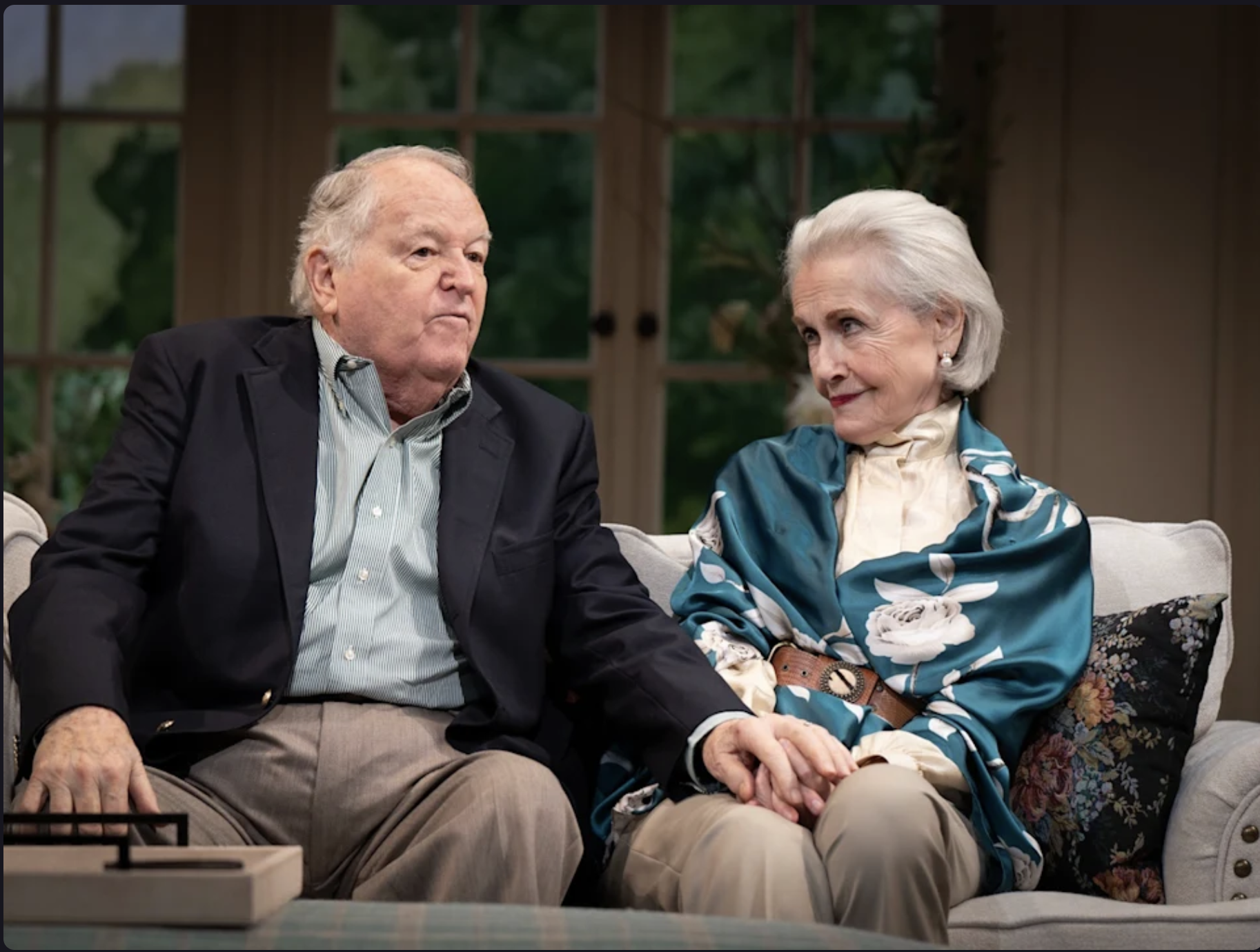
Her performance drags down the supporting cast, including the always radiant Montego Glover as Judith, Lyssa’s longtime friend who is struggling to conceive. As the gender studies writer Quincy Quince, Carmen Ziles adeptly conveys her character’s calculating ambition but lacks any other defining characteristics. Ghaffari depicts the sleek polish of Timber Tucker, and Spahn does what he can with the vague character of Morrow McCarthy, but his character is underwritten and his motivations lack any clarity. Matthews is clearly the most comfortable of the ensemble as the verbose Senator, along with the always outstanding Mary Beth Peil as his latest wife, the explicably nicknamed Chubby. The farthest removed from the political scene, she also is the happiest of the group.
Wasserstein did not consider An American Daughter finished, and it’s equally impossible to wonder what might have been had she lived longer and continued writing. Her compassionate wit and piercing insight would be a welcome voice in America today.