
Girl, Interrupted
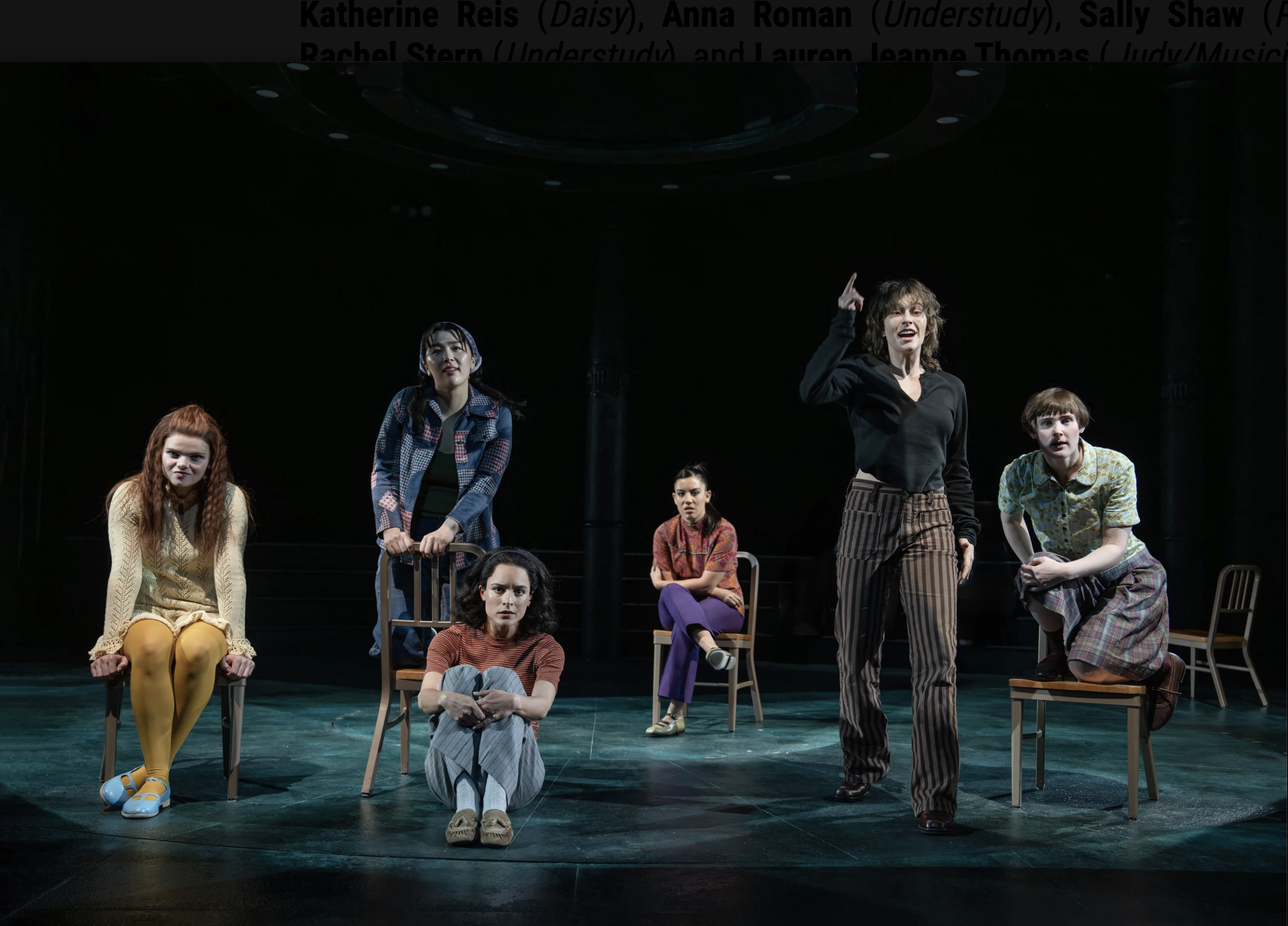
Katherine Reis, Mia Pak, Juliana Canfield, Gabi Gampo, King Princess and Sally Shaw as patients at McLean in Girl, Interrupted.
Photo by Joan Marcus
Published July 7, 2026
Open discussions of mental health, including treatments like therapy and medication, are far from forbidden subjects in the way they were 70 years ago, when Girl, Interrupted takes place. Thanks to societal progress, as well as works of art the 1998 film adaptation of Kaysen’s 1993 book starring Winona Ryder and Angelina Jolie and the more recent excellent television show Crazy Ex-Girlfriend, emotional well-being is now openly discussed in person and online.
Thanks to such progress, one wonders if Girl, Interrupted, a story set in 1967 might seem quaint or irrelevant. This critic is both happy and sad to report it is not. It is both timely and timeless.
The “play with music,” in its world premiere Off-Broadway at the Public Theater, is adapted from Susanna Kaysen’s memoir of the same title that chronicles the 18 months she spent at the McLean psychiatric hospital. Following a suicide attempt with a bottle of aspirin and vodka, a bewildered Susan is checked in following a single consultation with a doctor (chosen by her father). Encouraged to take a few days to “rest,” Susanna agrees but is far from happy. When the audience meets her, she is confused and frightened and prickly and defensive.
Directed by Jo Bonney, the long-gestating musical features music by Aimee Mann and a book by Martyna Majok. First announced in 2018, the project was delayed by the pandemic and Mann released Queens of the Summer Hotel, an album inspired by Kaysen’s writing. The album, on which Mann performs the entirety, is eerie and haunting and thrilling. But when worked into the structure of a musical, the lilting, dreamy melodies, with orchestration and arrangements by music supervisor Todd Almond, seem adrift, at times obstructing the musical’s success in storytelling, rather than propelling it.
Narrating directly to the audience, Susanna (played by Juliana Canfield) recalls her time at McLean, remembering her stagnant refusal to work with her doctor (the excellent Emily Skinner, wonderfully communicative in impressively few words) before the bonds she forms with her fellow patients and the cruel realities of being a woman with mental illness motivate her to find a way out.
Susanna, a recent high school graduate, longs to be a writer and recalls that her mental health began to declinewhen she found herself unable to write. She also was groomed and abused by a teacher. The scenes of the two, when he began targeting her at the Frick Museum as she gazed, enthralled, at Vermeer’s “Girl Interrupted at Her Music,”, are deeply uncomfortable, a testament to the power of the performers. Given her passion for writing, it seems fitting that Susanna is sent to McLean, which was home to Sylvia Plath, Robert Lowell and Anne Sexton – a fact communicated by her roommate, Grace (Mia Pack, heartbreaking), in a wistfully reverberant song.
Also at McLean are Lisa (King Princess), a diagnosed sociopath; Polly (Sally Shaw), who iscovered in scars after lighting herself on fire; Tori (Gabi Campo), who is addicted to drugs and fears returning to her family in Mexico; and Daisy (Katherine Reis), who suffers from an eating disorder. Each patient is given their own solo, with Polly’s “Let It Burn” as a standout, to accompany Susanna’s direct narration to the audience. While Mann’sthe songs enhance the depth of the characters, they do not move the plot forwardand isolate the characters from each other, a counterintuitive technique for a story that chronicles the impact of unlikely friendships.
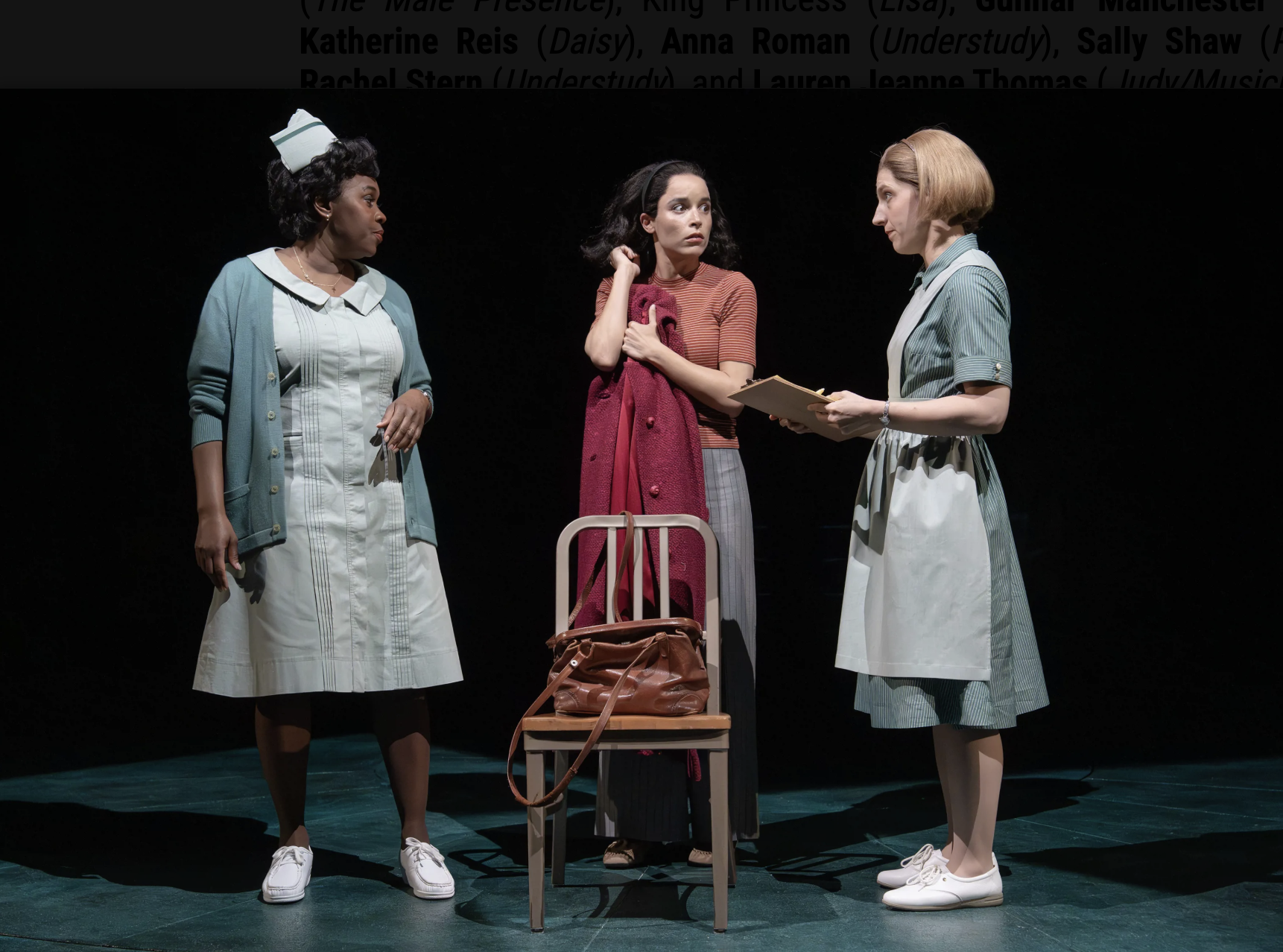
Ta’Rea Campbell, Juliana Canfield and Lauren Jeanne Thomas as nurses and patient in Girl, Interrupted.
Photo by Joan Marcus
As a result, Girl, Interrupted is more of a chamber piece/character study than a full-fledged musical, despite the efforts of the notably talented cast. The series of vignettes at the hospital depict the cruelty of mental health system, the lack of trust its caregivers have in its practices and, most bluntly, the sexism and misogyny that dominate the system as well as the patients’ reactions to their glimpses of the world outside of the hospital during the politically and socially chaotic 1960s.
All the male characters are played effectively by Manuel Felciano, most chillingly when he sings “15 Minutes,” describing the impersonally efficient methods to diagnose his female characters. Sonya Tayeh’s choreography, portrayingthe patients as rag dolls positioned and pushed aside by Felciano, is frightening.
Bonney’s staging, which features all of the cast members onstage even when not performing, acting as witnesses and/or memories to Susanna’s stories, is powerfully simple, further enhanced by Heather Gilbert’s lighting design. Other than a turntable and a few chairs, and a large blue cylinder provided by the set design cooperative dots, along with a piano and a few strings,the stage is bare, providing Susanna a blank slate on which to narrate her story – which takes an even darker turn as she witnesses the bleak futures of her fellow patients as they either succumb to their illness or are freed from the hospital but unable to survive outside.
Newly determined to leave McLeanbut thwarted by sexism, Susanna finds herself with two choices – become a dental hygienist or get married. (One has to wonder if any other career options were presented to her.) But actress’ haunting delivery of, “I recovered because of a marriage proposal,” is chilling in its simplicity, as is the musical’s final scene which, in a surprisingly clumsy moment of writing, shows us that Susanna’s life is far from a happy ending. Even on the outside, she is still – literally and metaphorically – being interrupted.