
<?xml version="1.0" encoding="UTF-8"?>
<rss version="2.0"
	xmlns:content="http://purl.org/rss/1.0/modules/content/"
	xmlns:wfw="http://wellformedweb.org/CommentAPI/"
	xmlns:dc="http://purl.org/dc/elements/1.1/"
	xmlns:atom="http://www.w3.org/2005/Atom"
	xmlns:sy="http://purl.org/rss/1.0/modules/syndication/"
	xmlns:slash="http://purl.org/rss/1.0/modules/slash/"
	>

<channel>
	<title>Carey Purcell</title>
	<atom:link href="http://www.careypurcell.com/?feed=rss2" rel="self" type="application/rss+xml" />
	<link>http://www.careypurcell.com</link>
	<description></description>
	<lastBuildDate>Fri, 14 Jun 2013 01:30:55 +0000</lastBuildDate>
	<language>en-US</language>
	<sy:updatePeriod>hourly</sy:updatePeriod>
	<sy:updateFrequency>1</sy:updateFrequency>
	<generator>http://wordpress.org/?v=3.5.1</generator>
		<item>
		<title>Ashley Marinaccio and Brady Amoonclark Talk About &#8220;Good Shape&#8221;</title>
		<link>http://www.careypurcell.com/?p=9601</link>
		<comments>http://www.careypurcell.com/?p=9601#comments</comments>
		<pubDate>Fri, 14 Jun 2013 01:14:58 +0000</pubDate>
		<dc:creator>carey</dc:creator>
				<category><![CDATA[Interview]]></category>
		<category><![CDATA[—]]></category>
		<category><![CDATA[Body Image]]></category>
		<category><![CDATA[Eating Disorders]]></category>
		<category><![CDATA[Girl Be Heard]]></category>
		<category><![CDATA[Good Shape]]></category>
		<category><![CDATA[Planet Connections Theatre Festivity]]></category>
		<category><![CDATA[Weight Loss]]></category>

		<guid isPermaLink="false">http://www.careypurcell.com/?p=9601</guid>
		<description><![CDATA[What would happen if everyone woke up tomorrow and loved the body they were in? That is a good question. And one that is being asked in the upcoming documentary theatre production Good Shape, which will be performed as a &#8230; <a href="http://www.careypurcell.com/?p=9601">Continue reading <span class="meta-nav">&#8594;</span></a>]]></description>
				<content:encoded><![CDATA[<p><a href="http://www.careypurcell.com/?attachment_id=9606" rel="attachment wp-att-9606"><img src="http://www.careypurcell.com/wp-content/uploads/2013/06/1.jpg" alt="-1" width="160" height="164" class="alignleft size-full wp-image-9606" /></a>What would happen if everyone woke up tomorrow and loved the body they were in?</p>
<p>That is a good question. And one that is being asked in the upcoming documentary theatre production <em>Good Shape</em>, which will be performed as a reading as part of the Planet Connections Theatre Festivity on Saturday, April 15 at 11:30 AM.</p>
<p>Wirtten by Ashley Marinaccio and Brady Amoonclark, <em>Good Shape</em> explores the relationship between capitalism, consumer culture and self-hatred. Marinaccio and Amoonclark began their work on <em>Good Shape</em> by conducting and filming interviews with a variety of men and women and and explores the topic through video, song and dance.</p>
<p>Marinaccio and Amoonclark reached out to people using social media and began asking them about their relationships with their own bodies. They said conducting the interviews was enlightening, both to them and to the people they interviewed.</p>
<p>“It’s been really beautiful, interviewing women and hearing their stories and watching them explore territory that they haven’t explored publicly, or that they haven’t been willing to explore before,” Amoonclark said. “I have a real interest in sort of documenting this phenomenon that women are expected to hate themselves. It’s a sort of quiet truth in our society that no one really explicitly acknowledges, but we all walk around with this idea that most women don’t feel good about themselves.”</p>
<p>The act of examining these consequences of this phenomenon was startling for many,  Amoonclark said.</p>
<p>“This seemed like a revolutionary paradigm to so many people,” Amoonclark said of people being asked what would happen if they loved their bodies. “People had trouble wrapping their brains around it, because it would be such a shift in perception.”</p>
<p>The most common response to this question, Marinaccio said, was the statement that marketing and advertising would be out of business. This response, as well as the idea that self-hatred was so common,  was eye-opening to her.</p>
<p>“It’s very rare to have it said out loud,” Amoonclark said. “It’s the quiet truth. It’s the more subtle, pervasive, thing. We never allow a 1950s Lysol commercial for douching now. We just won’t accept that as a society. But we will accept this kind of subtle undercurrent of everyone waking up every day and feeling shitty about themselves.”</p>
<p>One consequence of this shared sentiment is the profitable industry of weight loss, <a href="http://www.prweb.com/releases/2011/5/prweb8393658.htm." target="_blank">which took in $60 billion in 2011</a>. But despite the popularity of the industry, <a href="http://www.psychologytoday.com/articles/200201/fit-life-keeping-the-weight" target="_blank">95% of people who lose weight cannot keep it off long-term</a>. Another startling statistic about body image and self-hatred is that <a href="http://womenscenter.virginia.edu/body-positive.php" target="_blank">60% of women in college show disordered eating</a>, and <a href="http://www.cnn.com/2012/08/22/health/child-eating-disorders" target="_blank">the hospitalization rate for disordered eating was 112%</a>. </p>
<p><em>Good Shape</em> was not originally intended to focus only on women’s body image, but after Amoonclark and Marinaccio released a call for interviews, the majority of the people who responded were women. Amoonclark said three men were interviewed, but their responses to the questions were drastically different than women’s.</p>
<p>“The women’s studies explored such new emotional territory that we gravitated toward them,” Amoonclark said. “It’s great that we were able to make our show a show full of women’s stories, by two women, directed by women, stage managed by a woman &#8211; it’s an all-women creative team, which you never see.”</p>
<p>One interview that stood out to Amoonclark and Marinaccio was a former dancer who referred to George Balanchine as “the Lord High Devil of Body Image.” Despite her experiences with Balanchine, this woman said she had reached a place where she no longer cared about popular standards of beauty. </p>
<p>“She began to appreciate the beauty in all different types of bodies and experiences and traveling the world and seeing the wide range of what is beautiful and recognizing people who continue to be trapped by the social cultural standards of beauty and being able to feel free enough to escape it,” Amoonclark said.</p>
<p>“There seemed to be a theme of liberation for many older women we interviewed,” Marinaccio said. “They got to a point where they were like, ‘F***k this. I’m not going to sit around and allow myself to let this self-hatred to win any more. I’m going to make choices to change this dialogue I have with myself.”</p>
<p>The self-hatred Amoonclark and Marinaccio recognized in their interviews could also be tied to the ongoing feeling that women cannot win, no matter what they do. One woman they interviewed cited two magazine covers in the same month that referred to Gwyneth Paltrow as the Most Beautiful Woman Alive and the Most Hated Woman Alive.</p>
<p>“Where is the space for women to succeed?” Amoonclark asked. “Where do we see women who aren’t villains? Where do we see women who aren’t monsters? Where do we see women who succeed and are unapologetic about it? Where do we see working mothers who are not guilty about it? The spiral continues on and on.”</p>
<p>Amoonclark cited a Tumblr named “<a href="http://isthisfeminist.tumblr.com/" target="_blank">Is This Feminist?</a>” which portrayed the numerous and varied pressures women face, the many expectations placed upon them and the feeling of failure if they do not embody all of the roles they are expected to play.</p>
<p>One of those roles is that of a healthy and beautiful woman, but the Amoonclark and Marinaccio expressed frustration at the definition of “healthy” in current society.</p>
<p>“I think there’s no way for a woman to succeed,” Amoonclark said. “There are signs that say, ‘Skinny is the new healthy,’ everywhere. Skinny is not acceptable anymore. Healthy is the new skinny &#8211; it is no longer enough to be skinny. You have to be skinny and have a six pack and have boobs and a butt. How can we encourage women to love the bodies they are? Our bodies are the only home we have. This is our space. How can we joyfully reclaim our space and take it back?”</p>
<p>The question of how to reclaim one’s body is one explored in <em>Good Shape</em>, and both Amoonclark and Marinaccio believe it starts with the choice to do just that.</p>
<p>“I think it starts with deciding that you want to change the narrative about your body, seeking out cultural resources that support that, maybe changing your media influence &#8211; as much as you can,” Amoonclark said. “I think it starts with deciding what you need for yourself and having the courage to go out and get it, and having the courage to not engage in body shame talk and not participate or support organizations that shame, demean or belittle women.”</p>
<p>Marinaccio said exploring shame and openly discussing shame, as well as sexuality, is also an important part of women reclaiming their bodies for themselves.</p>
<p>One aspect of shame that came up in the interviews for <em>Good Shape</em> was sexual harassment in the workplace, and the constant pressure of women to conform to one physical stereotype or another. Length of hair, whether to wear a skirt or pants, whether to show cleavage or not, and various other aspects of a woman’s physical appearance at their jobs were all areas where women were told they were doing wrong, in one way or another.</p>
<p>“No one will take a woman in power, in a powerful role, because you look too feminine, or you don’t look feminine enough,” Marinaccio said, recalling one of her personal experiences. “There was no way to win.”</p>
<p>“What we’re trying to create with our piece is a way to win,” Amoonclark said. “We want to create dialogue that empowers women to talk with the people in their lives towards a way to succeed. What would it look like where a woman was capable of succeeding and fully succeeding? Not succeeding halfway, and not succeeding in one area, but totally successful. We have plenty of examples of successful men. Where are examples of successful women that don’t have a footnote or asterisk following it?”</p>
<p>This perceived inability to succeed stifles women from telling their stories, Amoonclark said. </p>
<p>“When women are empowered to tell their own stories, then they can tell the truth about their experiences,” Amoonclark said. “Women are always subject to other people’s expectations. How can we be authentic?”</p>
<p>That authentic voice is what Amoonclark and Marinaccio hope <em>Good Shape</em> will help people find. </p>
<p>“Whatever works for you is your journey. You have to find your own journey towards health. And you should be supported by people who are invested in your total health,” Amoonclark said. “Rather than people who are invested in your conforming to a certain societal standard of appearing a certain way. So when we talk about <em>Good Shape</em> people think of good shape as a physical look. What does &#8216;good shape&#8217; look like? But I think of &#8216;good shape&#8217; as more of an internal feeling. Maybe not even the physical I can lift 50 pounds. But the feeling of feeling healthy and nourished and vibrant. And feeling like you have the right to take up the space that you are entitled to as a person.”</p>
]]></content:encoded>
			<wfw:commentRss>http://www.careypurcell.com/?feed=rss2&#038;p=9601</wfw:commentRss>
		<slash:comments>0</slash:comments>
		</item>
		<item>
		<title>9mm America</title>
		<link>http://www.careypurcell.com/?p=9578</link>
		<comments>http://www.careypurcell.com/?p=9578#comments</comments>
		<pubDate>Tue, 04 Jun 2013 13:18:54 +0000</pubDate>
		<dc:creator>carey</dc:creator>
				<category><![CDATA[Review]]></category>
		<category><![CDATA[—]]></category>

		<guid isPermaLink="false">http://www.careypurcell.com/?p=9578</guid>
		<description><![CDATA[Anyone suffering from desensitization regarding gun violence as a result of oversaturation of the media should hurry to the Gene Frankel Theatre, where 9MM America is currently playing. A production of Girl Be Heard, this intimate and personal performance of &#8230; <a href="http://www.careypurcell.com/?p=9578">Continue reading <span class="meta-nav">&#8594;</span></a>]]></description>
				<content:encoded><![CDATA[<p><a href="http://www.careypurcell.com/?attachment_id=9579" rel="attachment wp-att-9579"><img src="http://www.careypurcell.com/wp-content/uploads/2013/06/images.jpg" alt="images" width="185" height="272" class="alignleft size-full wp-image-9579" /></a>Anyone suffering from desensitization regarding gun violence as a result of oversaturation of the media should hurry to the Gene Frankel Theatre, where <em>9MM America</em> is currently playing. A production of <a href="http://girlbeheard.org/" target="_blank">Girl Be Heard</a>, this intimate and personal performance of documentary theater about gun violence in America is deeply moving and incredibly upsetting &#8211; in the best way possible. </p>
<p>A series of skits and songs written by the members of Girl Be Heard and inspired by their own experiences, <em>9MM America</em> explores and exposes the stories of gun violence that do not make the front page headlines. The young women in the show talk about racism and sexism, about being frisked by police officers when walking down the street while white people walk by unnoticed, and about the inherent masculinity and objectification of women of and through violence. They are angry and they are not afraid to show it. </p>
<p><em>9MM America</em> opens playing a video of young girls jumping rope, singing &#8220;Ring Around the Rosey,&#8221; but slowly the lyrics change to, &#8220;Gunshots, gunshots, we all fall down.&#8221; This image, and numerous others used throughout the production, enhance the onstage action but thankfully do not distract from it, because what is happening there is powerful and it is real. </p>
<p>The scenes and songs the young women act out are beautifully performed, and the honesty behind them is apparent. The young women share their own stories about experiencing violence, losing loved ones to violence and living in fear of violence. More than once, they state as a chorus, &#8220;This violence is an American epidemic and I am infected. You are infected.&#8221; </p>
<p>The show bravely explores the cyclical nature of violence, not only honoring the sadness behind it but looking into why it exists in the first place. I found myself extremely moved by a skit where the girls talk about their after-school program being shut down and asking where they are supposed to go other than the streets. The skit ended with the cast singing a haunting melody of, &#8220;All I Wanna Say Is They Don&#8217;t Really Care About Us.&#8221; Another scene that struck me was when a woman knocked on a stranger&#8217;s door and asked for permission to hunt, explaining why she chose to hunt and how she justified hunting. It was powerfully performed and very thought-provoking about how a topic not commonly discussed in the New York theater community might be viewed in a different community. </p>
<p><em>9MM America</em> also presented a skit where women pretended to be men and shared their thoughts on how they defined their masculinity with violence and justified their acts of violence with their masculinity. Given the <a href="http://www.policymic.com/articles/40049/nra-vendor-sells-ex-girlfriend-target-that-bleeds-when-you-shoot-it" target="_blank">recent sale of an &#8220;ex-girlfriend hunting target,&#8221;</a> I was especially appreciative of this segment. They also issued a call to &#8220;control something that is an object rather than objectifying someone who is controlled.&#8221; <em>9MM America</em> also addressed how guns and violence are trivialized in pop culture, portraying bluntly how the topic is treated so lightly. </p>
<p><em>9MM America</em> is a piece of performance art, but the stories that are told in the show are true. They are the stories of these young women who are brave enough to share their own experiences and tell the truth. This fact makes the desperation of their message even more powerful, as they ask, &#8220;When will it stop?&#8221; With works like <em>9MM America</em> being created, the answer is hopefully sooner than one might think.  </p>
]]></content:encoded>
			<wfw:commentRss>http://www.careypurcell.com/?feed=rss2&#038;p=9578</wfw:commentRss>
		<slash:comments>3</slash:comments>
		</item>
		<item>
		<title>Tucker Max on Broadway? An Interview with &#8220;I Hope They Serve Beer on Broadway&#8221; Director Christopher Carter Sanderson</title>
		<link>http://www.careypurcell.com/?p=9502</link>
		<comments>http://www.careypurcell.com/?p=9502#comments</comments>
		<pubDate>Fri, 31 May 2013 00:13:31 +0000</pubDate>
		<dc:creator>carey</dc:creator>
				<category><![CDATA[Interview]]></category>
		<category><![CDATA[—]]></category>
		<category><![CDATA[Bro Culture]]></category>
		<category><![CDATA[Christopher Carter Sanderson]]></category>
		<category><![CDATA[Feminism]]></category>
		<category><![CDATA[I Hope They Serve Beer in Hell]]></category>
		<category><![CDATA[I Hope They Serve Beer on Broadway]]></category>
		<category><![CDATA[sexism]]></category>
		<category><![CDATA[Tucker Max]]></category>

		<guid isPermaLink="false">http://www.careypurcell.com/?p=9502</guid>
		<description><![CDATA[Tucker Max&#8230;on stage. Right. Adapted for the stage by a gay man who doesn’t drink. Right. That was my first thought when I heard about I Hope They Serve Beer on Broadway, the stage adaptation of Tucker Max’s best-selling books &#8230; <a href="http://www.careypurcell.com/?p=9502">Continue reading <span class="meta-nav">&#8594;</span></a>]]></description>
				<content:encoded><![CDATA[<p><div id="attachment_9567" class="wp-caption alignleft" style="width: 277px"><a href="http://www.careypurcell.com/?attachment_id=9567" rel="attachment wp-att-9567"><img src="http://www.careypurcell.com/wp-content/uploads/2013/05/1-267x300.jpg" alt="Photo by Orin J. Hahn" width="267" height="300" class="size-medium wp-image-9567" /></a><p class="wp-caption-text">Photo by Orin J. Hahn</p></div>Tucker Max&#8230;on stage.</p>
<p>Right.</p>
<p>Adapted for the stage by a gay man who doesn’t drink.</p>
<p>Right.</p>
<p>That was my first thought when I heard about <em>I Hope They Serve Beer on Broadway</em>, the stage adaptation of Tucker Max’s best-selling books <em>I Hope They Serve Beer in Hell</em> and <em>Assholes Finish First</em>. Directed, produced and adapted by Christopher Carter Sanderson, the production revolves around Tucker Max’s stories, most which are largely autobiographical, and has already sold out its limited Off-Broadway run, with plans to move to Broadway and a national tour.</p>
<p>The choice to adapt Max’s work for the stage was a surprise to many, as Max is known for his books that celebrate the frat boy, “bro culture” of heavy drinking and promiscuous sex. He introduces himself on his website by saying, “My name is Tucker Max, and I am an asshole,” and has increased his notoriety with inflammatory tweets like, &#8220;Planned Parenthood would be cooler if it was a giant flight of stairs, w/ someone pushing girls down, like a water park slide #FF @PPact” and &#8220;In South Florida. This place is awful. Shitty design, slutty whores &#038; no culture, like a giant Planned Parenthood waiting room.&#8221; (In fact, <a href="http://www.huffingtonpost.com/2012/04/03/planned-parenthood-tucker-max-donation_n_1399396.html" target="_blank">Planned Parenthood turned down a donation of $500,000 from Max</a> in 2012, crediting their decline to the way in which Max wrote about women.) </p>
<p>As a full disclosure, I have not read all of Max’s books. I have read many of his essays and interviews with him, and given the nature of his statements, and the fact that he called Sanderson “a theater fag” to his face, I wondered if his work would find an audience on in the New York theater scene, where women and homosexuals make up a great deal of the industry and audience.</p>
<p>But <em>I Hope They Serve Beer on Broadway</em> is not a literal adaptation of Max’s work, according to Sanderson, who talked with me about the show and what he hopes to achieve with it. Rather, starring five men and women re-enacting the tales from the book, the play is an examination of Max&#8217;s work, which Sanderson finds to be filled with opportunities to examine present-day culture and societal norms.</p>
<p>Sanderson, founding artistic and producing director of the Gorilla Repertory Theater Company, has been working as a director for 26 years and has put up numerous Shakespeare productions. The idea to adapt Max’s work to the stage came when a friend gave him a copy of <em>I Hope They Serve Beer In Hell</em> and his first impression was that it wasn’t his sort of thing. But after a few more pages, he began laughing and didn’t stop.</p>
<p>“He has a funny way of turning a phrase, and he might not always be aware of it, but he’s able to write a character who’s aware,” Sanderson said of Max. “He’s often the butt of his own jokes. Of course, reading it, I was able to contextualize it in my own life. I don’t have to believe the same things the characters I read believe.”</p>
<p>When Sanderson thanked his friend for giving him the book, he mentioned he thought it would make a funny piece of theater, and its humor would be enhanced even more it if was performed by theater artists, gay, lesbian, Latino, black, and transgender musical theater loving “theater fags,” as Max calls them.</p>
<p>“We could really do something quite spectacular with this,” he said. ‘By doing so, we would perhaps make it into something artistic Tucker might not have imagined, but might be quite beautiful in accomplishing the theater’s key goal of making work that speaks to everyone.”</p>
<p>Sanderson’s friend told him he was “full of shit,” but Sanderson went on with the project, comparing it to a bar bet. But as Sanderson began discussing Max’s work with his friends, he found many of the conversations began with them confessing that Max was a guilty pleasure of theirs.</p>
<p>By bringing this guilty pleasure to the stage, Sanderson hopes to inspire a new type of of examination of Max’s work.</p>
<p>“I’m bringing it into a safe environment where this material can be examined for what it is, but by a group of people who are patently very different from being entitled white men,” he said. “That’s really important. The exercise of taking it and being able to examine it is an exercise in dialectic thinking that will actually benefit the entire discussion.”</p>
<p>One aspect of the discussion Sanderson hopes to benefit is the theme of oppression, saying, “Women are oppressed in our society. There’s no two ways about it. The statistics back it up.”</p>
<p>Sanderson, who described himself as a devotee of Paulo Freire, the author of <em>Pedagogy of the Oppressed</em>, said, “One of the most basic tenets that he demonstrates in an oppressive system, the oppressor is also oppressed. If the oppressor is replaced by someone else or another class or another person, the system itself is not damaged. The oppressor is simply replaced. Nothing changes.”</p>
<p>But the theme of oppression is not a stagnant one, because, Sanderson said, the oppressed find ways to grow and overcome that oppression in their lives.</p>
<p>“They find their strength and hope and manage to move forward despite the setbacks of oppression, and that often leads to the development of an extremely excellent sense of humor, which I can say my actors are exercising brilliantly,” he said.</p>
<p>Sanderson identifies himself as a feminist, which, he said, “means putting into action my belief that men and women should be given equal opportunities in our society, in all ways considered equal,” he said. “Believing that is one thing, but putting it into action is what makes me a feminist.”</p>
<p>He takes his actions seriously, saying, “I wake up every day and look in the mirror and say, ‘How can I not be a racist today? How can I not be an oppressive, misogynist jackass today?’ I have to trust that the cumulative acts of that make me a better person.’”</p>
<p>Max has been called a sexist by many people, with blogs and Facebook pages as well as numerous feminist websites devoted to <a href="http://bitchmagazine.org/post/douchebag-decree-marketing-tucker-max" target="_blank">calling him a misogynist</a> and <a href="http://amplifyyourvoice.org/u/vanessaaishacoleman/2009/09/22/tucker-max-fratire-and-rape-culture" target="_blank">accusing him with promoting rape culture</a>. <a href="http://www.thestylus.net/students-protest-tucker-max-lecture-in-student-union-1.2904718#.UZrq8YJAvdA" target="_blank">Students have protested his speaking engagements</a> on their college campuses. </p>
<p>&#8220;There is no depiction of rape in any of Tucker Max’s books. Nor has Tucker Max ever been accused of rape by anyone,&#8221; Sanderson said. &#8220;And I assume I don&#8217;t have to repeat that therefor there is no depiction of any rape in my play, nor would I ever be involved in any way with a play that in any way depicted rape as positive or was associated with a rapist. I cannot imagine anything more loathsome.&#8221;</p>
<p>Some consider the criticism of Max to be disproportionate, given the <a href="http://www.careypurcell.com/?p=7480" target="_blank">rape culture</a>, <a href="http://www.careypurcell.com/?p=7536" target="_blank">slut shaming</a> and misogyny that exists in numerous other aspects of culture, and many have praised Max for sharing his experiences and promoting the culture of “fratire.” <em>I Hope They Serve Beer in Hell</em> also features quotes from readers, one of whom wrote to Max, saying, “Thank you, thank you, thank you &#8211; for sharing with us your wonderful tales of drunken revelry, for teaching me what it means to be a man, for just existing so I know that there is another option; I too can say ‘screw the system and be myself and have fun. My life truly began when I finished reading your stories. Now, when faced with an quandry about what course of action I should take, I just ask myself, ‘What would tucker do?’ &#8211; and I do it, and I am a better man for it.”</p>
<p>The cover of <em>I Hope They Serve Beer in Hell</em> features a photo of Max with a female figure, but with the faces cut out, and a sign that says, “Your face here.” Many have interpreted this image as being sexist and implying that women are disposable to Max, but Sanderson said there are no blank faces in his cast.</p>
<p>“They have their own identities, and have chosen to engage in this with me. They’re not stupid, and they’re not oppressed and they’re not cattle,” he said. “They’re intelligent people, and each in their own way understand this message. More importantly, they’re doing it onstage wonderfully and making audiences laugh hard and think hard and hopefully learn.”</p>
<p>Inspiring discussion and education has long been a goal of Sanderson&#8217;s, who cited the audience at his Shakespeare productions, which include a homeless man and a millionaire both laughing at the same thing.</p>
<p>“In that laughter, they find a crucible, it becomes a moment for one,” he said. “If I can do that in some small way every night with this show, with sexuality and issues around sexuality and oppression, I will feel that I’ve been a successful artist.”</p>
<p>While many find laughter in Max’s stories, others find them to be glorifying immature actions taken by young men. In a letter to the website Jezebel, <a href="http://jezebel.com/that-tucker-max-play-is-actually-an-awesome-high-art-pa-487243153" target="_blank">Sanderson wrote of the trend of “bro culture,” saying</a>:</p>
<p><em>For whatever you think about Tucker—and much of it is true, and I agree with most of it—you must see that his books are possibly the best anthropological text we have about modern American &#8220;frat&#8221; or &#8220;bro&#8221; culture (and which perhaps passes for the dominant form of masculine culture as well, sadly). My play is an exploration of this culture that is so pervasive and dominant in America, yet so understudied and misunderstood. That exploration is not being done by members of that culture, obviously, Tucker&#8217;s book included. I believe this play can show that bro culture as it truly is—sexist, misogynist, exclusionary, but also vulnerable, sad, and ultimately doomed—and not how it is represented in beer commercials or Hollywood movies. </em></p>
<p>Sanderson, who says he is neither a scientist or a sociologist, does say he has sensed a feeling of being lost amongst young men, mentioning examples he had witnessed of young men feeling confused by social norms.</p>
<p>“These feelings and ideas by the media and his contemporaries who just to me seem quite bafflingly lacking in positive strong male role models,” he said. </p>
<p>He also said he thinks that if members of &#8220;bro culture&#8221; hope to oppress women, they are not succeeding. </p>
<p>“If bro culture was ever convinced that people it was oppressing just wander off and die, the answer is no. They have wonderful lives. They can entertain the hell out of you and make you laugh at your own foolishness and hopefully help you grow.”</p>
<p>Sanderson credits a great deal of his own growth to the time he spent serving in the Navy, saying, “I served under a lot of really great senior enlisted leaders, and the one I felt did the best job was female. We were very indoctrinated in gender equality. I was actually very encouraged to see fellow navy members change their attitudes, which I would have characterized originally as bro culture in getting through to understanding it’s about respect or equality and those things are not abstract, and they’re really important. I think what taught them the best is when these ideas were utilized consistency over time, the unit was clearly a more efficient unit&#8230;There’s no proof like proof. I’m certainly would be very happy if some people who felt somewhat directionless felt better guided toward ideas towards equality by seeing a show.”</p>
<p>Sanderson spoke highly of the production’s cast, saying, “The first people to discuss these issues and engage in these issues is the cast itself. And they are intelligent, educated, feminist, brilliant &#8211; every one of them are very different and come at the material from a different point of view. They are all provoked to ask questions and get into the dialogue.”</p>
<p>He said many of his cast’s friends are surprised by their choice to perform in the play, saying, “Their friends say, “You’re in what?” and they turn around and say, ‘I’m in this, and this is what’s going on with it.’</p>
<p>Sanderson also spoke highly of Max himself, saying, “I love Tucker Max. He’s not somebody who I believe should be condemned as some kind of criminal or misconstrued as some kind of Nazi. I don’t agree with all his sense of humor&#8230;in my personal interaction with Tucker, I never detected any note of malice.”</p>
<p>Despite the popularity and notoriety of Max’s books, Sanderson said people familiar with the work may be surprised by what they see onstage. In adapting the books for the theater, he said deciding what to spotlight recontextualizes the medium.</p>
<p>“I didn’t choose to give it to them as it was written,” he said. “I chose to have human beings of many different backgrounds, all of whom are artists, walk into a room and personify it in a theatrical style. We’re not condescending to the material. We’re inhabiting the material so absolutely honestly that you have to react to it right in the room. That reaction is very different than simply reading the writing.”</p>
<p>There was a strong response to the announcement that <em>I Hope They Serve Beer on Broadway</em> was being performed, and Sanderson said he will welcome feedback to the show &#8211; as long as people have seen it.</p>
<p>“I have absolutely no time for anyone who criticizes any writing at all without having read what they have criticized. There should be room for a lot of different voices out there,” he said. “I will make space for people to protest this show &#8211; if they have seen it. If they have not seen it, then they are engaging in the exact same oppression as Puritans.</p>
<p>“The simple fact is, if you haven’t seen it, then the criticism is not criticism, it’s oppression. It’s an attempt at censorship. If they’ve got a ticket stub, then they’re welcome to space in the lobby. I’m here to engender discussion; I’m here to facilitate the discussion. I’m here to get everyone’s voices heard as far as they possibly can, and I will align myself with forces that do so.”</p>
<p>While <em>I Hope They Serve Beer on Broadway</em> may inspire protests, Sanderson said his ultimate goal is to inspire conversation, saying, “I really want people to laugh together at our show, and then walk away talking about issues about sexuality.” </p>
]]></content:encoded>
			<wfw:commentRss>http://www.careypurcell.com/?feed=rss2&#038;p=9502</wfw:commentRss>
		<slash:comments>1</slash:comments>
		</item>
		<item>
		<title>Sexism Onstage and Off: Why I Am Glad &#8220;Smash&#8221; is Cancelled</title>
		<link>http://www.careypurcell.com/?p=9527</link>
		<comments>http://www.careypurcell.com/?p=9527#comments</comments>
		<pubDate>Thu, 23 May 2013 13:28:04 +0000</pubDate>
		<dc:creator>carey</dc:creator>
				<category><![CDATA[Blog Posts]]></category>
		<category><![CDATA[—]]></category>
		<category><![CDATA[Anjelica Huston]]></category>
		<category><![CDATA[Bombshell]]></category>
		<category><![CDATA[Broadway]]></category>
		<category><![CDATA[Hit List]]></category>
		<category><![CDATA[Katharine McPhee]]></category>
		<category><![CDATA[Megan Hilty]]></category>
		<category><![CDATA[NBC]]></category>
		<category><![CDATA[Smash]]></category>

		<guid isPermaLink="false">http://www.careypurcell.com/?p=9527</guid>
		<description><![CDATA[I am one of the biggest musical theater geeks in the world, but even I am glad Smash is being cancelled. The NBC drama about putting on a Broadway show, starring Katharine McPhee and Megan Hilty, as well as Debra &#8230; <a href="http://www.careypurcell.com/?p=9527">Continue reading <span class="meta-nav">&#8594;</span></a>]]></description>
				<content:encoded><![CDATA[<p><a href="http://www.careypurcell.com/?attachment_id=9528" rel="attachment wp-att-9528"><img src="http://www.careypurcell.com/wp-content/uploads/2013/05/smash-newsblog-300x294.jpg" alt="smash-newsblog" width="300" height="294" class="alignleft size-medium wp-image-9528" /></a>I am one of the biggest musical theater geeks in the world, but even I am glad <em>Smash</em> is being cancelled.</p>
<p>The NBC drama about putting on a Broadway show, starring Katharine McPhee and Megan Hilty, as well as Debra Messing, Anjelica Huston, Christian Borle and numerous guest stars, ran for two seasons before it was cancelled. The slow had faced a slew of criticism regarding its storyline, its characters and even its costumes, before NBC pulled the plug.</p>
<p>The decision to cancel <em>Smash</em> was disappointing for numerous reasons. The show brought attention to the arts, which are severely underfunded. It showed how wonderful and exciting the New York theater community can be. It featured the songwriting talents of Marc Shaiman and Scott Wittman, whose songs for the musical <em>Bombshell </em>were outstanding, as well as the ample talents of Hilty and Borle. Additionally, numerous episodes included Huston throwing a cocktail in someone’s face.</p>
<p>But even though there were numerous aspects of <em>Smash</em> I did enjoy, why I am glad the show was cancelled has nothing to do with the previously mentioned reasons. I am relieved that <em>Smash</em> is off the air because of the disappointing ways it portrayed women throughout its two seasons.</p>
<p>The potential for strong female characters in <em>Smash</em> was ample. Anjelica Huston played a Broadway producer seeking to establish herself independently. Debra Messing played a successful playwright. Megan Hilty played an established Broadway chorus girl looking for a role that would make her a star. And Katharine McPhee played an newcomer to the theater community competing with Hilty for the leading role. Both of the younger characters were unmarried and attempting to create their own careers. </p>
<p>But despite the opportunity to develop strong, independent characters, the writers of <em>Smash</em> created banal, pedestrian women whose entire lives revolved around men in some way. It was clear by watching the excellent acting talents of Huston, Hilty and Messing that they deserved more. </p>
<p><em>Smash </em>opened with Huston’s character, recently divorced, attempting to mount a Broadway show to prove she could do it on her own, without the help of her ex-husband. The first season revolved mainly around Hilty’s character, Ivy, having a relationship with her director, while McPhee’s character, Karen, refused his advances and eventually landed the leading role in the show. Messing’s character, Julia, engaged in an affair with an actor who manipulated and threatened her with exposing their relationship. After the story got out, she desperately tried to save her marriage, frequently expressing remorse for her actions. In the second season, she struggled with choosing between working with her best friend, Tom (Borle), and working with her new boyfriend Scott (Jesse Martin). Despite the talented women playing these characters, they were not engaging, and none of them stood on their own. All of their conflicts and the resulting decisions were based around men.</p>
<p><em>Smash</em> clearly portrayed the Madonna/whore complex in the disparity with which it depicted the characters Karen and Ivy. Karen, with wholesome-looking brown hair and delicate features, played the pure muse to the character of the director Derek (Jack Davenport), while the curvaceous Ivy played his lover. Karen rejected Derek when he asked her to sleep with him, but Ivy quickly began a relationship with him. Karen remained faithful to her boyfriend, who eventually cheated on her with Ivy. It was not a surprise to me that in the season’s conclusion Karen was triumphantly cast in the leading role in the musical while Ivy remained in the chorus.</p>
<p>When Ivy “cleaned up her act,” for lack of a better term, she began to get what she wanted: a featured role in one musical and then the leading role in <em>Bombshell</em>. But the ridiculous idea of having to be a a “good girl” still followed her; she was told she might not win the Tony Award for Best Actress in a Musical simply because of her off-stage behavior. In order to win, she was told she had to be “Marilyn” onstage and “Norma Jean” offstage. People wouldn&#8217;t vote for her unless she was a &#8220;good girl.&#8221; One of the most frustrating aspects of the show’s conclusion is that in the second-to-last episode, Ivy finds out she is pregnant. She has been sleeping with her previous director, Derek, in what appeared to be a consensual romantic relationship. But apparently in <em>Smash</em>’s world, that isn’t acceptable, and she has to “face the consequences.”</p>
<p>Not only did <em>Smash</em> portray this archaic and sexist theme in its show regarding its female characters, it did not apply the same standards to the male ones. Derek did face a potential lawsuit from several actresses who accused him of sexual harassment, but when one of them began to blackmail him, he is portrayed as a victim of someone else’s manipulation. The troubled songwriter Jimmy (played by Jeremy Jordan) began a relationship with Karen, in a classic example of a &#8220;good girl&#8221; trying to save a &#8220;bad boy.&#8221; He even told her, &#8220;I haven&#8217;t been a good person, but since I met you, it&#8217;s all I want to be,&#8221; and asks her to tell him what he has to do to be the person she saw in him. But when Jimmy and Karen&#8217;s relationship ended and he saw her with another man, he was furious with her and she was apologetic, even though she had seen him with numerous other women after they broke up. Another example of hypocrisy took place when Kyle (Andy Mientus) cheated on his boyfriend with Tom and kept it a secret. After he was killed in a car accident, the show played flashbacks of him with Tom like it was a great romance, and everyone treated him like he was a saint or a martyr. Yes, his death was a tragedy, but the sanctifying of the character, given that he was cheating on his boyfriend, was not understandable. </p>
<p>The disparity with which the sex lives of the male and female characters was portrayed on <em>Smash</em> was disappointing, to say the least. I had hoped that a show about an artistic community would portray a more understanding and progressive environment. Homosexuality was treated with respect on<em> Smash</em>, which was a wonderful step forward for mainstream television and, given the recent hate crimes in New York, extremely necessary. But the archaic and old-fashioned ideas of male and female sexuality was extremely disappointing. I hope the next show to premiere on NBC will be written with a greater focus on equality. </p>
]]></content:encoded>
			<wfw:commentRss>http://www.careypurcell.com/?feed=rss2&#038;p=9527</wfw:commentRss>
		<slash:comments>0</slash:comments>
		</item>
		<item>
		<title>Cuff Me: The Fifty Shades of Grey Musical Parody</title>
		<link>http://www.careypurcell.com/?p=9497</link>
		<comments>http://www.careypurcell.com/?p=9497#comments</comments>
		<pubDate>Mon, 20 May 2013 00:27:43 +0000</pubDate>
		<dc:creator>carey</dc:creator>
				<category><![CDATA[Review]]></category>
		<category><![CDATA[—]]></category>
		<category><![CDATA[Fifty Shades Darker]]></category>
		<category><![CDATA[Fifty Shades Freed]]></category>
		<category><![CDATA[Fifty Shades of Grey]]></category>
		<category><![CDATA[Musical]]></category>
		<category><![CDATA[Off-Broadway]]></category>
		<category><![CDATA[Pardoy]]></category>

		<guid isPermaLink="false">http://www.careypurcell.com/?p=9497</guid>
		<description><![CDATA[It’s no secret that I’m not a fan of the Fifty Shades of Grey book series. Having read all three, I wrote a blog post sharing my opinions on the relationship in the book &#8211; which I consider to be &#8230; <a href="http://www.careypurcell.com/?p=9497">Continue reading <span class="meta-nav">&#8594;</span></a>]]></description>
				<content:encoded><![CDATA[<p><a href="http://www.careypurcell.com/?attachment_id=9498" rel="attachment wp-att-9498"><img src="http://www.careypurcell.com/wp-content/uploads/2013/05/Alex+Gonzalez+Matthew+Brian+Bagley+Cuff+Fifty+57qmqRJd4HVx-200x300.jpg" alt="Alex+Gonzalez+Matthew+Brian+Bagley+Cuff+Fifty+57qmqRJd4HVx" width="200" height="300" class="alignleft size-medium wp-image-9498" /></a>It’s no secret that I’m not a fan of the <em>Fifty Shades of Grey</em> book series. Having read all three, <a href="http://www.careypurcell.com/?p=8141" target="_blank">I wrote a blog post sharing my opinions on the relationship in the book</a> &#8211; which I consider to be grossly unhealthy, manipulative and abusive &#8211; and received numerous comments and e-mails calling me judgmental, highly religious and sexually frigid, among other things. While I do not enjoy or appreciate the books, and I think they pose a huge danger to the feminism movement, I am fascinated by their popularity  and the place they have received in our culture. So when I heard a musical parody of the books would begin playing Off-Broadway, I knew I had to go.</p>
<p><em>Cuff Me: The Fifty Shades of Grey Musical Parody</em> was written by Bradford McMurran, Jeremiah Albers, and Sean Michael Devereux of the improv group The Pushers. It was conceived by Tim Flaherty, who is also a contributing author along with Sonya Carter who is directing. Performed in the Actor’s Temple (yes, a place of worship), <em>Cuff Me</em> spoofs the book’s story as well as its popularity. Starring Matthew Brian Bagley, Laurie Elizabeth Gardner, Alex Gonzalez and Tina Jensen, it’s an entertaining and amusing show that inspired a great deal of laughter &#8211; and a few raised eyebrows.</p>
<p><em>Cuff Me</em> opens with two women receiving pedicures, while one of them pages through <em>Fifty Shades of Grey </em>and utters a few moans of pleasure. She begins telling the other woman about the book, and the cast then begins acting the book’s story. Some substantial changes in the plot have been made, the most significant being that Anastasia is presented as a ditzy airhead with no common sense, rather than the shy, meek woman she is written as in the book. At first I wasn’t sure why this change had been implemented, but I quickly realized that if Ana were played onstage as she had been written, there would be no story. It would be simply too boring. And written as she was for the stage, taking everything literally and without question, Ana had the ability to reflect some of the ridiculous aspects of the plot that a character true to the book would not have. I did laugh very loudly when she deadpanned, “I just get special treatment because I’m the protagonist of this story.”</p>
<p>The show includes pop songs with the lyrics re-written to fit into the story. “Big Spender” is sung as Ana falls into Christian’s office to interview her. “Poker Face” becomes “Call Christian Grey,” and “If I Were a Rich Man” is sung by a gay lawyer who encourages Ana to sign Christian’s submission contract as “If I Were In Your Shoes.” Naturally, &#8220;Hit Me Baby One More Time&#8221; has a place in the show as well. All of the songs are performed by the very talented cast, which features Laurie Elizabeth Gardner as Ana, Matthew Brian Bagley as Christian, Alex Gonzalez in multiple roles including Ana’s lawyer, her inner goddess, one of the women at the nail salon and Tina Jensen as Ana’s roommate Kat, also her inner goddess, the other woman at the nail salon and more.</p>
<p>Gardner is a talented dancer and skillfully portrays Ana’s deadpan humor and innocence. As Christian, Bagley skilfully portrays the man’s controlling tendencies and sex appeal. Bagley is hilarious in all of his roles, and his singing voice is especially strong, and Jensen steals the scene as Kat, determinedly trying to work her subplot into the story and even bursting into, “And I am telling you, I’m not going,” when Ana tries to force her off the stage.</p>
<p>Aside from the cast itself, what I enjoyed the most about <em>Cuff Me</em> was its portrayal of some of the more ridiculous aspects of the book. Ana repeatedly mentions her inner goddess, and she actually appears onstage in Cuff Me, depicting how absurd the idea is when it is actually depicted. It also made fun of the contract Christian asks Ana to sign before becoming his submissive, including outlandish things like, “being gnawed on by feral foxes.” And Christian’s red room of pain is filled with weapons hanging on the wall, but if you look closely, you can also find a few more amusing prop pieces, like a rubber chicken.</p>
<p>I did hope that <em>Cuff Me</em> would bring up the more feminist aspects of the show, and there were some great mentions of it here and there, like when one woman at the nail salon says to the other, “It’s like a whole women’s lib movement in 500 pages.” And when Christian begins ordering Ana around, he says, “I don’t want you drinking-” and she obediently spits out the beverage onto the table before he finishes the sentence with, “alcohol.” Given my disgust for the books and them being viewed as a love story, I would have enjoyed more of that in this show, but I also recognize that it wasn’t the intention of <em>Cuff Me</em> to be a feminist diatribe. It was meant to be a funny spoof, and it was. Or, as one of the women said to the other, “It’s not about the characters or the writing or the story. It’s about the pages and pages of smut.” </p>
]]></content:encoded>
			<wfw:commentRss>http://www.careypurcell.com/?feed=rss2&#038;p=9497</wfw:commentRss>
		<slash:comments>1</slash:comments>
		</item>
		<item>
		<title>The Trip to Bountiful</title>
		<link>http://www.careypurcell.com/?p=9472</link>
		<comments>http://www.careypurcell.com/?p=9472#comments</comments>
		<pubDate>Thu, 16 May 2013 21:33:04 +0000</pubDate>
		<dc:creator>carey</dc:creator>
				<category><![CDATA[Review]]></category>
		<category><![CDATA[—]]></category>
		<category><![CDATA[Broadway]]></category>
		<category><![CDATA[Cicely Tyson]]></category>
		<category><![CDATA[Condola Rashad]]></category>
		<category><![CDATA[Cuba Gooding Jr.]]></category>
		<category><![CDATA[Horton Foote]]></category>
		<category><![CDATA[The Trip to Bountiful]]></category>
		<category><![CDATA[Vanessa Williams]]></category>

		<guid isPermaLink="false">http://www.careypurcell.com/?p=9472</guid>
		<description><![CDATA[A trip to the theatre may not feel like a trip to the bountiful for some, but the production of Horton Foote’s play by the same name is certainly a bounty of pleasure. Currently in performances at the Stephen Sondheim &#8230; <a href="http://www.careypurcell.com/?p=9472">Continue reading <span class="meta-nav">&#8594;</span></a>]]></description>
				<content:encoded><![CDATA[<p><a href="http://www.careypurcell.com/?attachment_id=9473" rel="attachment wp-att-9473"><img src="http://www.careypurcell.com/wp-content/uploads/2013/05/image-300x223.jpg" alt="image" width="300" height="223" class="alignleft size-medium wp-image-9473" /></a>A trip to the theatre may not feel like a trip to the bountiful for some, but the production of Horton Foote’s play by the same name is certainly a bounty of pleasure. Currently in performances at the Stephen Sondheim Theater, this play, directed by Michael Wilson, offers up a bounty of emotion, both joyful and bittersweet.</p>
<p><em>The Trip to Bountiful</em> introduces us to the Watts family, where the matriarch, Carrie (played by Cicely Tyson in an outstanding performance) suffers from a failing heart. She lives with her son Ludie (Cuba Gooding Jr.) and his wife Jessie Mae (Vanessa Williams), and mother-in-law and daughter clash like oil and water. Ludie is recovering from a two-year illness that left him unemployed, and he and Jessie Mae rely on Carrie’s pension checks to make ends meet.</p>
<p>Carrie, on the other hand, is more interested, obsessed, even, with returning to her hometown, Bountiful. And she eventually makes her escape, uncashed pension check in hand, hobbling heroically across the stage with an almost child-like glee. On her trip there, she meets a young army bride named Thelma (Condola Rashad) and faces an adventure or two before seeing her old home for the last time.</p>
<p><em>The Trip to Bountiful</em> is a bittersweet play (as are many of Foote’s works) that, while focusing on a simple story or conflict, highlights the bigger picture of social or societal norms that require examining. And while the play addresses the issues of aging, of urban development and of economic struggles, <em>The Trip to Bountiful</em> also highlights the placement of women in the culture of that time &#8211; which was always surrounding and focused on men. Carrie is a widow, so she lives with her son. During her bus ride, she confides in Thelma that she never loved her husband; instead she loved another man but was not permitted to marry him because their father’s did not get along. She says this so calmly and matter-of-factly it takes a moment for the words to register, but when they do, the grief and pain underneath is quite visible.</p>
<p>Jessie Mae and Ludie are childless, and she is is restless and bored during the day while her husband is at work, so she meets her friends to drink Coca Colas at the drug store and talk about other people’s husbands and children. Thelma’s husband is at war and it is unthinkable for her to consider living alone, so returns to her family’s home. And while it is Carrie who escapes to return to Bountiful, it is two men a kindly bus station attendant (Devon Abner) and a sheriff (a robust Tom Wopat) who actually get her there.  </p>
<p>Despite the patriarchal restrictions of society on women, it is clear by the end of <em>The Trip to Bountiful</em>  that Carrie is no one’s prisoner. The joy and vigor that seeing her hometown provide her refresh her spirit of life &#8211; and her peace with it coming to an end. As Carrie, Tyson gives a performance of such compassion, grace and strength that, when she burst into song (a joyous hymn) the audience immediately began clapping along. She portrays how society had held her back and caged her in and how returning to her home of her own free will helped her regain her dignity and strength.</p>
<p>I was especially impressed by Williams’ performance as Jessie Mae, the restless housewife. While Jessie Mae could have easily been played as shrewd and heartless, Williams communicates how her character wants more from life and doesn’t know how to obtain it. Rather than watching Carrie and Jessie Mae clash and immediately taking a side, I found myself torn between the two women. Life wasn’t giving either of them what they really deserved.</p>
<p>Cuba Gooding Jr. is a bit too placid as Ludie, but, given the strength of the women surrounding him, it is almost understandable how he fell into the role of peacemaker. When he finally does stand up to Jessie Mae, at the pay’s conclusion, the audience burst into applause.</p>
<p>As Thelma, the young and kind-hearted war bride, Rashad gives a one-note performance. The part doesn’t give her much to work with, but I expected more spunk from the woman who had so impressed me with her performance in <em>Stick Fly</em>.</p>
<p><em>The Trip to Bountiful</em>  is beautifully rendered, with Jeff Cowie’s sets and Rui Rita’s lighting emphasizing the claustrophobic  atmosphere of the apartment the three family members share as well as the open-air spaciousness of Bountiful. But no matter how lovely the sets, it’s hard to look at anything else when Tyson is onstage. She is the brightest light in this production by far. </p>
]]></content:encoded>
			<wfw:commentRss>http://www.careypurcell.com/?feed=rss2&#038;p=9472</wfw:commentRss>
		<slash:comments>0</slash:comments>
		</item>
		<item>
		<title>Pippin</title>
		<link>http://www.careypurcell.com/?p=9466</link>
		<comments>http://www.careypurcell.com/?p=9466#comments</comments>
		<pubDate>Wed, 15 May 2013 13:01:26 +0000</pubDate>
		<dc:creator>carey</dc:creator>
				<category><![CDATA[Review]]></category>
		<category><![CDATA[—]]></category>
		<category><![CDATA[Andrea Martin]]></category>
		<category><![CDATA[Broadway]]></category>
		<category><![CDATA[Circus]]></category>
		<category><![CDATA[Diane Paulus]]></category>
		<category><![CDATA[Musical]]></category>
		<category><![CDATA[Patina Miller]]></category>
		<category><![CDATA[Pippin]]></category>
		<category><![CDATA[Revival]]></category>
		<category><![CDATA[Stephen Schwartz]]></category>

		<guid isPermaLink="false">http://www.careypurcell.com/?p=9466</guid>
		<description><![CDATA[I knew I was in for a treat from the first moment of Pippin, when a sexy silhouette of a certain pair of hands appeared, along with a sultry invitation to, “join us.” The revival of this musical, currently in &#8230; <a href="http://www.careypurcell.com/?p=9466">Continue reading <span class="meta-nav">&#8594;</span></a>]]></description>
				<content:encoded><![CDATA[<p><a href="http://www.careypurcell.com/?attachment_id=9467" rel="attachment wp-att-9467"><img src="http://www.careypurcell.com/wp-content/uploads/2013/05/Pippin_Joan_Marcus_1931.jpg.644x1810_q100-300x185.jpg" alt="Pippin_Joan_Marcus_1931.jpg.644x1810_q100" width="300" height="185" class="alignleft size-medium wp-image-9467" /></a>I knew I was in for a treat from the first moment of <em>Pippin</em>, when a sexy  silhouette of a certain pair of hands appeared, along with a sultry invitation to, “join us.” The revival of this musical, currently in performances at the Music Box Theatre, is a cumulative theatrical treat &#8211; sweet and savory, with just the right amount of salty.</p>
<p>Directed by Diane Paulus, <em>Pippin</em>, with a score by Stephen Schwartz’s and a book by Roger O. Hirson, tells the story of a young man eagerly and earnestly searching for meaning in his life. He is, he says, in pursuit of something “completely fulfilling.” While doing so, he tries his hand at war, sex, political revolution and everyday home life, but nothing feels exactly right.</p>
<p>I personally have always found <em>Pippin</em> to be a weak musical, feeling impatience with the never-satisfied protagonist who came across to me as more of a whining brat than a noble hero. But this production’s theatricality is enhanced with extraordinary acrobatic feats, and its tongue is planted firmly, and refreshingly, in its cheek at certain moments. The result is a thoroughly entertaining and satisfying show that, even after clocking in at two and a half hours, left me wanting more.</p>
<p><em>Pippin</em> is narrated by a leading player (played with sultry mischief by an excellent Patina Miller) and a company of performers who promise us they have “magic to do.” In this production, the company is a troupe of circus performers who perform wondrous acrobatics throughout the show. Staged on Scott Pasek’s tattered circus-themed set, with Kenneth Posner’s eerie lighting and clad in Dominique Lemieux’s sexy costumes, they are worked seamlessly into the story. And they more than capably perform Chet Walker’s suggestive and jazzy choreography, which is credited “in the style of Fosse,” and depicts the brutality of both war and sex, as well as the ideas of temptation and desperation that permeate Pippin’s life. (Gypsy Snider, of the French-Canadian company Les 7 Doigts de la Main, is credited with “circus creation” in this production.)</p>
<p>The heart of <em>Pippin</em> rests with the Leading Player, and Miller easily fills the tall, sexy, high-heeled boots of the role. She is sultry and scary at the same time; strutting the stage with a Cheshire Cat-like grin, she tempts and taunts Pippin throughout his journey. And oh, can she dance; leading the “Glory” number that depicts the war and guiding Pippin that he’s “on the right track,” Miller steps into a role immortalized by Ben Vereen in the original production and makes it her own.</p>
<p>Matthew James Thomas plays the title role, giving it a youthful innocence and eagerness. His boy-band like voice suits the role well, and he depicts the emotional and intellectual journey that the young man embarks on. Terrence Mann is hilarious as Pippin’s father Charlamange, playing the part as a masculine and powerful buffoon. Charlotte D’Amboise is clearly having a great time as Charlemagne’s scheming wife, Fastrada, and her dance solo in the ironic song “Spread a Little Sunshine” is a joy to watch. (I especially enjoyed the effect of her singing about “spreading a little sunshine” while throwing knives at her husband.) And Andrea Martin gives a sensational performance as Berthe, Pippin’s grandmother, literally stopping the show in the first act. Her warmth and heart, as well as her commanding presence of the stage, are unforgettable.</p>
<p>The only principal performance I did not love was Rachel Bay Jones’ turn as Catherine, the widow Pippin meets and eventually falls in love with. Jones has a beautiful voice and is entertaining to watch, but she plays the role as an absent-minded airhead, breathing heavily between almost every word she spoke. While it does add some comedy to the show, I didn’t understand why it was necessary to play the role in that manner, nor did I enjoy the lyrics of “I Guess I’ll Miss the Man,” which stated the only reason she wanted Pippin was that he was the only man who had come along in a while. But she and Thomas share a warm chemistry and their duet, “Love Song” is very sweet.</p>
<p>The story of <em>Pippin</em> is a bittersweet one, as are all stories of growing up and, at times, giving up. The musical is a coming of age story, and Pippin’s acceptance of the fact that life is never going to be completely fulfilling all the time is a bit melancholy. Seeing this message portrayed in a musical theater production, where fantasy and escape are the name of the game, is a bit jarring. But the show does end on a note of hope &#8211; and mystery &#8211; and, as the Leading Player declares, glory, after all. And glory is the real name of the game because it is exactly what this production of <em>Pippin</em> has achieved. </p>
]]></content:encoded>
			<wfw:commentRss>http://www.careypurcell.com/?feed=rss2&#038;p=9466</wfw:commentRss>
		<slash:comments>0</slash:comments>
		</item>
		<item>
		<title>I&#8217;ll Eat You Last</title>
		<link>http://www.careypurcell.com/?p=9458</link>
		<comments>http://www.careypurcell.com/?p=9458#comments</comments>
		<pubDate>Thu, 09 May 2013 16:04:04 +0000</pubDate>
		<dc:creator>carey</dc:creator>
				<category><![CDATA[Review]]></category>
		<category><![CDATA[—]]></category>
		<category><![CDATA[Agent]]></category>
		<category><![CDATA[Bette Midler]]></category>
		<category><![CDATA[Hollywood]]></category>
		<category><![CDATA[Joe Mantello]]></category>
		<category><![CDATA[Sue Mengers]]></category>

		<guid isPermaLink="false">http://www.careypurcell.com/?p=9458</guid>
		<description><![CDATA[Anyone who loves and longs for juicy gossip but feels a bit shamed by the desire should hurry to the Booth Theatre, where I’ll Eat You Last, the new play about Hollywood superagent Sue Mengers and starring a delicious Bette &#8230; <a href="http://www.careypurcell.com/?p=9458">Continue reading <span class="meta-nav">&#8594;</span></a>]]></description>
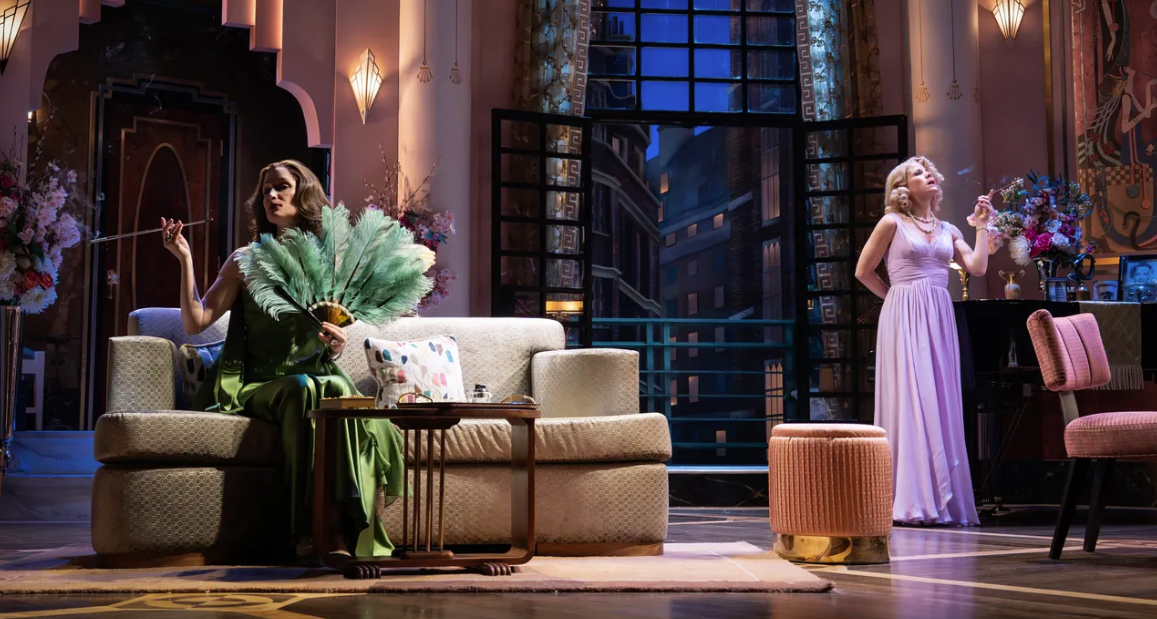
				<content:encoded><![CDATA[<p><a href="http://www.careypurcell.com/?attachment_id=9459" rel="attachment wp-att-9459"><img src="http://www.careypurcell.com/wp-content/uploads/2013/05/1954_wide-a2399f466a43da5a25d96fd77e7e4b16fb87808f-s6-c10-300x168.jpg" alt="1954_wide-a2399f466a43da5a25d96fd77e7e4b16fb87808f-s6-c10" width="300" height="168" class="alignleft size-medium wp-image-9459" /></a>Anyone who loves and longs for juicy gossip but feels a bit shamed by the desire should hurry to the Booth Theatre, where <em>I’ll Eat You Last</em>, the new play about Hollywood superagent Sue Mengers and starring a delicious Bette Midler, is in performances.</p>
<p>Written by John Logan (<em>Red</em>) and  directed by Joe Mantello, this 90-minute monologue opens begins with the statement, “If you can’t say anything nice about someone, come sit by me.” And the audience is more than happy to do so. Set in 1981, on the even of one of Mengers’ legendary dinner parties, the famed agent has settled into the pillow-strewn couch for a nice long chat. She unapologetically declares that she won’t get up for us, but she will treat us to a few stories about her career. And by her career, she means famous people in Hollywood. Because, after all, as Mengers says, “I just don’t understand why anyone would talk about anything other than showbiz.”</p>
<p>The real-life Mengers, who died in 2011, rose to fame as the first female superagent in Hollywood. And this Mengers, vividly brought to life by a wickedly funny Midler, who gives a performance filled with zest and relish, is more than happy to talk about herself. Relaxing in a silk caftan (designed by Ann Roth) her sun-soaked living room (the palatial set is designed by Scott Pask, with the warm afternoon sunshine portrayed by Hugh Vanstone’s lighting), Mengers tells us just how she got to be where she is and who she is.</p>
<p>For Mengers is nothing if not a self-made woman. At first, her story is standard biopic. Immigrant girl ashamed of her heritage learns how to talk like the classmates she admires. Girl becomes obsessed with the movies but abandons her dream of being an actor because she doesn’t think she’s pretty enough. Girl climbs career ladder and shatters her own personal glass ceiling, rising to success in a male-dominated world. In short, girl makes good.</p>
<p>And once she has made good, oh, how she enjoys it. Logan’s script is packed to the brim with names dropped left and right and insider stories about <em>this </em>person and <em>that</em> person. We learn how Mengers obtained the female lead in “Chinatown” for Faye Dunaway, the lengths she want to in order to get Gene Hackman cast in &#8220;The French Connection,&#8221; and we hear the inside details on how Ali McGraw was seduced away from Hollywood by Steve McQueen, and how the rising star became a supposedly happy housewife. We hear story after story about how  Mengers got what she wanted. We even witness her attempting to woo Sissy Spacek away from her current agent, because, as Mengers informs us, if people aren’t trying to steal your clients, you’re doing something wrong.</p>
<p>Loyalty, or lack of it, is an interesting theme in <em>I’ll Eat You Last</em>, for all is not well in Mengers&#8217; world. she has just lost one of her top clients and oldest friends, Barbra Streisand. Streisand’s agent has done the firing and Mengers is waiting on a phone call from Streisand herself. She recounts the story of what went wrong and offers the first glimpses of her vulnerability. Witnessing a crack in this steely exterior is fascinating; we get another when a dinner guest calls to cancel at the last minute.</p>
<p>While the stories and zingers are plentiful and plenty entertaining in <em>I’ll Eat You Last</em>, I wanted to know more about Mengers herself, especially her thoughts on being the only woman in such a male-dominated industry. Aside from a few comments about how people viewed her or were surprised by her &#8211; “A woman who drank and swore and knew what she was talking about and looked f***ing adorable” &#8211; little was said about her own personal experiences in the industry. Did people expect her to sleep with them to get her clients their parts? Did she resent being excluded from sauna room business deals? Was her husband &#8211; only mentioned once, in passing &#8211; resentful of her success? How, if at all, did her job affect her marriage?</p>
<p>As the first female superagent, Menger&#8217;s contributions to society and ambitious women are certainly plentiful, but she doesn’t reflect on herself much at all, except to share her thoughts about perhaps leaving the industry. These reflections aren’t very deep and seem to only scratch the surface of a complex and fascinating woman, but how deep can a play about Hollywood celebrities be?</p>
<p>For it’s clear Mengers&#8217; star is beginning to fade, just like the sunlight she was bathed in as the day began. But night is approaching; as the afternoon whiles away and she indulges in marijuana, her reflections on “the great Mahjong game that is Hollywood” become darker. But, as she says, she loves the game. </p>
]]></content:encoded>
			<wfw:commentRss>http://www.careypurcell.com/?feed=rss2&#038;p=9458</wfw:commentRss>
		<slash:comments>1</slash:comments>
		</item>
		<item>
		<title>Old-Fashioned Prostitutes (A True Romance)</title>
		<link>http://www.careypurcell.com/?p=9443</link>
		<comments>http://www.careypurcell.com/?p=9443#comments</comments>
		<pubDate>Wed, 08 May 2013 17:58:22 +0000</pubDate>
		<dc:creator>carey</dc:creator>
				<category><![CDATA[Review]]></category>
		<category><![CDATA[—]]></category>
		<category><![CDATA[Public Theater]]></category>
		<category><![CDATA[Richard Foreman]]></category>

		<guid isPermaLink="false">http://www.careypurcell.com/?p=9443</guid>
		<description><![CDATA[“I certainly do exist. Help me,” a character pleads in Old-Fashioned Prostitutes: (A Love Story), the new play by Richard Foreman currently in performances at the Public Theater. I&#8217;m sorry to say I could not help this person, because, despite &#8230; <a href="http://www.careypurcell.com/?p=9443">Continue reading <span class="meta-nav">&#8594;</span></a>]]></description>
				<content:encoded><![CDATA[<p><a href="http://www.careypurcell.com/?attachment_id=9444" rel="attachment wp-att-9444"><img src="http://www.careypurcell.com/wp-content/uploads/2013/05/4.164867-300x225.jpg" alt="4.164867" width="300" height="225" class="alignleft size-medium wp-image-9444" /></a>“I certainly do exist. Help me,” a character pleads in <em>Old-Fashioned Prostitutes: (A Love Story)</em>, the new play by Richard Foreman currently in performances at the Public Theater. I&#8217;m sorry to say I could not help this person, because, despite what he said, I wasn&#8217;t even sure if he existed. </p>
<p>This play, if you can call it that, is also directed by Foreman, who has come out of a self-declared retirement from the theater, to helm it at the Public. Having never seen a work by Foreman before, I researched his background and knew not to expect a traditional piece of theater. Foreman, whose works were frequently seen at the Ontological-Hysteric Theater at St. Mark’s Church in the East Village in his earlier years, has long reigned as the king of experimental theater in New York. But, despite my research, I left <em>Old-Fashioned Prostitutes completely</em> baffled, uncertain of what I had just experienced.</p>
<p>The play, which I have been told, features a man looking back at his past, is staged on a set decorated to (sort of) resemble a boudoir. Luxurious cloths and pillows strew the stage, as well as items that I assume are meant to be symbolic, such as pieces of fruit with needles shoved through them hanging from the ceiling, which certain characters strain to reach as they deliver their lines. <em>Old-Fashioned Prostitutes</em> contains no clear narrative or plot, or even theme, really; although at times I noticed lines that I thought contained misogynistic undertones.</p>
<p>This scrambled story is narrated by a man who is sometimes called Samuel and is played by Rocco Sisto, who recounts (I think) his encounters with two women named Gabriella (Stephanie Hayes) and Suzie (Alenka Kraigher). Dressed like stylish women from the 1920s, the taunt and tease Samuel, speaking in breathy, dream-like voices. Samuel, wearing a monocle, a beret, golf shoes and an ancient open book on his stomach, reminisces and interacts with the women.</p>
<p>There is certainly desperation in Samuel’s interactions with Gabriella and Suzie, but I’m not sure what exactly he is desperate for. It’s unclear to me whether he loves or hates the women, especially Suzie, given that he pleads with another, “Never allow the beautiful Suzie to disappoint me,” and refers to her as, “Beautiful, silent Suzie.” But at the same time, he remarks, “Isn’t it amazing how much more comfortable I feel when I don’t look at that woman directly,” and when Suzie declares she can read his thoughts, she immediately becomes less beautiful to him.</p>
<p>The production of <em>Old-Fashioned Prostitutes</em> is visually intense, with lights flooding the audience and loud gunshots and unexplained noise effects taking place at full volume. A recorded voice often orders the actors to, “Hold it,” or declares, “OK.” It frequently stated, “End of play,” when, in fact, it was not.</p>
<p>I understand that <em>Old-Fashioned Prostitutes</em> was not intended to be a traditional narrative show, and while I can appreciate that intent, I cannot say I appreciated this production. While some delight in this kind of quandary, I do not, and I left the theater extremely puzzled and also disappointed in myself that, despite my research and preparation, I had not garnered more from this experience. While one character in <em>Old-Fashioned Prostitutes</em> stated, “I feel my question has been answered with a certain elegance,” I cannot say the same. Instead, I only have more questions. </p>
]]></content:encoded>
			<wfw:commentRss>http://www.careypurcell.com/?feed=rss2&#038;p=9443</wfw:commentRss>
		<slash:comments>0</slash:comments>
		</item>
		<item>
		<title>The Nance</title>
		<link>http://www.careypurcell.com/?p=9432</link>
		<comments>http://www.careypurcell.com/?p=9432#comments</comments>
		<pubDate>Thu, 02 May 2013 13:46:57 +0000</pubDate>
		<dc:creator>carey</dc:creator>
				<category><![CDATA[Review]]></category>
		<category><![CDATA[—]]></category>
		<category><![CDATA[Douglas Carter Beane]]></category>
		<category><![CDATA[Lincoln Center Theater]]></category>
		<category><![CDATA[Nathan Lane]]></category>
		<category><![CDATA[Vaudefille]]></category>

		<guid isPermaLink="false">http://www.careypurcell.com/?p=9432</guid>
		<description><![CDATA[“Everybody’s looking for love” in The Nance, Douglas Carter Beane’s moving new play in performances at the Lyceum Theater. This lyric, crooned onstage in a vaudeville performance, applies to more than simply romantic love. In The Nance, the titular character &#8230; <a href="http://www.careypurcell.com/?p=9432">Continue reading <span class="meta-nav">&#8594;</span></a>]]></description>
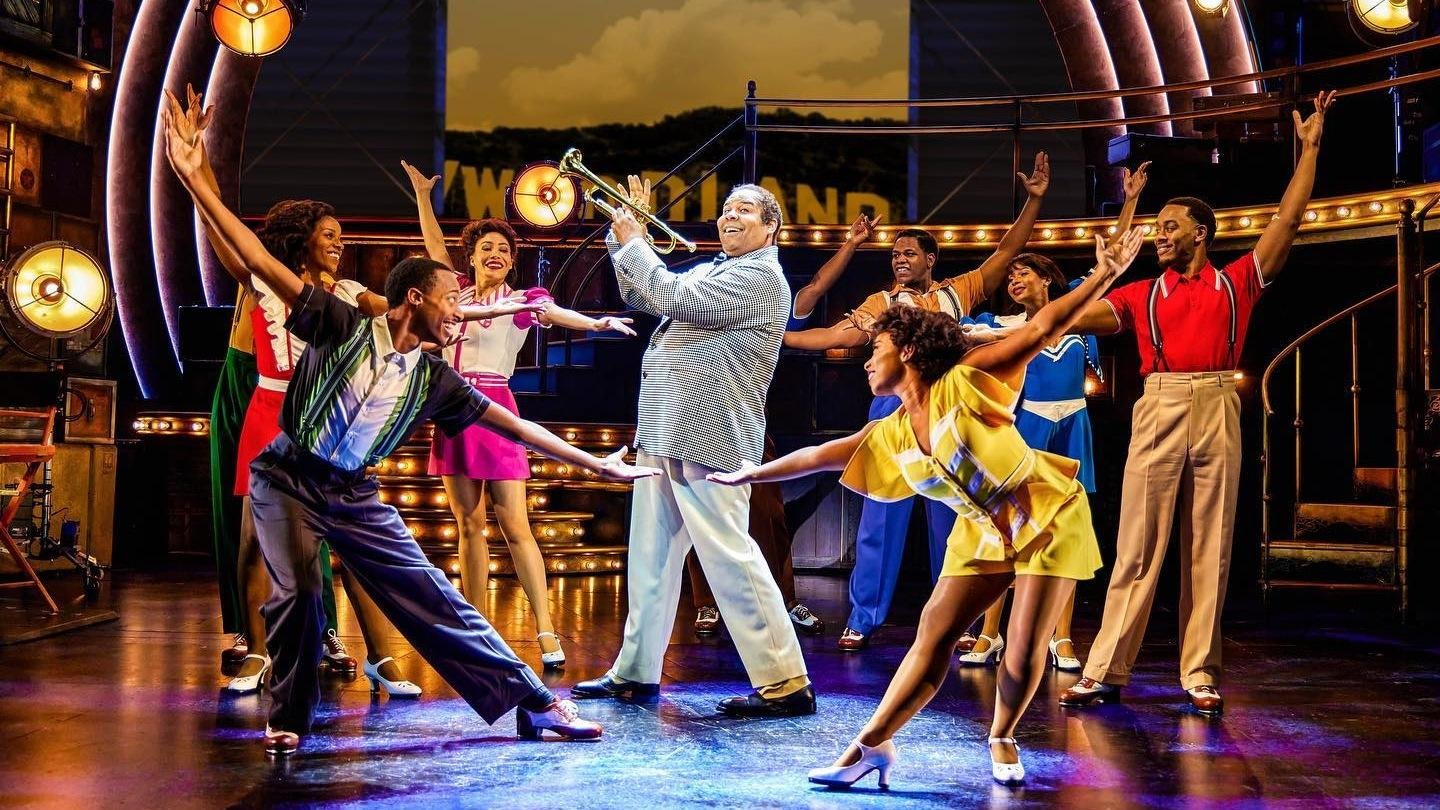
				<content:encoded><![CDATA[<p><a href="http://www.careypurcell.com/?attachment_id=9433" rel="attachment wp-att-9433"><img src="http://www.careypurcell.com/wp-content/uploads/2013/05/iU.UH0L7SMg4-300x200.jpg" alt="iU.UH0L7SMg4" width="300" height="200" class="alignleft size-medium wp-image-9433" /></a>“Everybody’s looking for love” in <em>The Nance</em>, Douglas Carter Beane’s moving new play in performances at the Lyceum Theater. This lyric, crooned onstage in a vaudeville performance, applies to more than simply romantic love. In <em>The Nance</em>, the titular character is seeking love from society, the audience and &#8211; this is the most difficult part &#8211; himself.</p>
<p>Chauncey Miles, played to pitch-perfect humor and drama by Nathan Lane, is a conundrum in 1930s New York. He plays a nance, a flamboyant homosexual character/caricature in a vaudeville show at the Irving Place Theater, and he is gay in his offstage life as well. As he explains, “It’s like a negro doing blackface.” <em>The Nance</em>, directed by Jack O’Brien, follows Chauncey as both his professional and personal life suffer in the twilight of burlesque while the LaGuardia administration cracks down on homosexuality by raiding theaters and arresting men for “degenerate and disorderly conduct.”</p>
<p>We first meet Chauncey when he is dining in an automat known to be friend to homosexuals. It is there where he meets the fresh-faced Ned (an excellent Jonny Orsini) and invites him home. What Chauncey thought to be an anonymous one-night stand Ned views as something more and the two embark on an actual relationship, something seemingly new to Chauncey. Ned soon begins performing at the Irving Place Theater, alongside Chauncey’s co-stars  Efram (an excellent, witty Lewis J. Stadlen) and a trio of strippers  (Cady Huffman, Jenni Barber and Andréa Burns), who perform Joey Pizzi’s period-specific choreography. <em>The Nance,</em> much like the musical <em>Cabaret</em>, alternates between real-life scenes and onstage performances that reflect or comment on the Chauncey’s actual life.</p>
<p>As both begin to rapidly deteriorate, <em>The Nance</em> takes a much darker turn, especially as Chauncey, a Republican, experiences rapid disillusionment with this political party. When the policeman raid the theater mid-performance, Chauncey chooses to remain onstage and be arrested, and in the courtroom, attempts to reason with the judge. He fails and, as he says forlornly to his friends later, he thought they would listen to him because he was one of them. This act of bravado, and the resulting despair, are beautifully portrayed by Lane, whom Beane had in mind for Chauncey while writing the play.</p>
<p>Lane gives Chauncey both the bravery and naivete he needs, honoring both the ego of an actor and the fear and loneliness that reside within that ego. As Chauncey watches the world he knew fall apart around him and indulges in extremely self-destructive behavior, Lane portrays both the despair and the anger that drive his actions. As his desperation and self-contempt begin to appear in his acts onstage, the result is simply heartbreaking. Chauncey is viewed as a hero by his friends but he loathes the compliment, preferring instead to suffer in isolation.</p>
<p>Lane is joined by an excellent supporting cast, all of whom fully inhabit their characters. Orsini gives a full-hearted, carefully textured performance as Ned, a man who can be honest with himself and his Chauncey, even when Chauncey cannot. Especially impressive is Huffman, playing a salty-tongued Communist who recognizes Chauncey’s spiraling self-destructive behavior.</p>
<p>Much like burlesque scenes in <em>The Nance</em>, beautifully rendered with sets by John Lee Beaty, lighting by Japhy Weideman and costumes by Ann Roth, reflected on Chauncey’s real life, the play <em>The Nance</em> reflects much on ours. As the Defense of Marriage Act is debated in the Supreme Court, the definition of equality is pondered in American culture. The fanatacism of the LaGuardia administration to, as Chauncey put it, “pander to the Jesus crowd” by shutting down burlesque shows and arresting homosexuals in order to gain re-election brought to mind the desperate attempts to restrict reproductive rights and eliminate abortion during the most recent election period.</p>
<p>Part of Chauncey’s onstage act involved someone asking him, “Are you a nance?” and him proudly responding with comedic exaggerated defensiveness, “Yes. And that doesn’t necessarily mean I’m a bad person!” As the play progressed, this statement sounded increasingly desperate. It is a shame that it still needs to be said almost 100 years later.</p>
]]></content:encoded>
			<wfw:commentRss>http://www.careypurcell.com/?feed=rss2&#038;p=9432</wfw:commentRss>
		<slash:comments>0</slash:comments>
		</item>
	</channel>
</rss>